Sunday, December 3, 2017

Things Change.

Isaiah 1-12
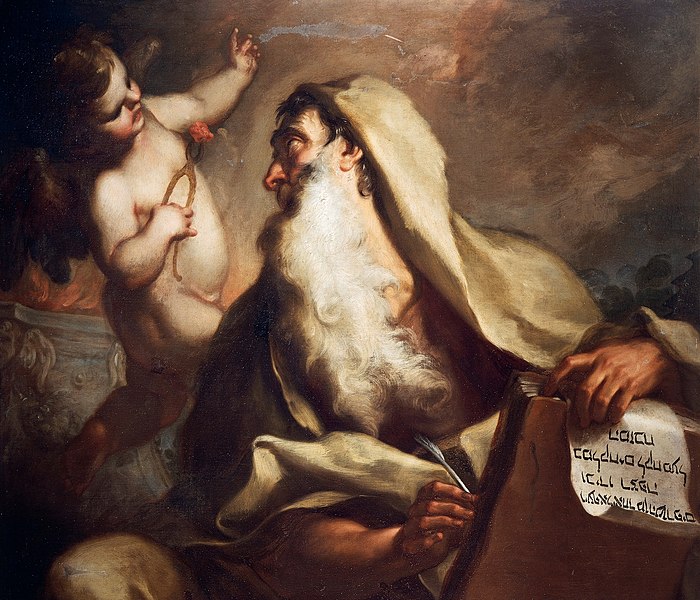
File:Antonio Balestra - Prophet Isaiah.jpg
Antonio Balestra, Prophet Isaiah 18th Century (PD)
Sitting in my first systematic theology class one afternoon, my professor posed a remarkably simple question to my classmates and me. 

Does God suffer?

Throughout seminary, there are a number of questions that can divide a classroom, but rarely do you find a question free of devil’s advocates and soapbox know-it-alls. 

That is the beauty of this question.

It starts so innocently. 

Does God suffer?

Of course, nine times out of ten you will find the same answer agreed upon. 

Yes, God does most certainly suffer!

It is apparent in the stories of the Bible, especially in the Christian narrative in which God suffers and dies on the cross as Jesus Christ. 

But this question is the little thread that unravels the whole theological Christmas sweater as we move into Advent. 

Because the term to suffer by its very definition implicitly means TO CHANGE. 

And at first glimpse, this isn’t such a bad thing until we consider what other problems this causes. 

Because a God that suffers and changes, means that God may not necessarily be immutable, consistent, reliable, dependable, and worst of all; 

God could very well be… unpredictable. 

That is a God who exists beyond our need for safety and for control. 

Putting it all in God’s hands is no longer an option, because we would have to redefine what it means to “trust” in a God that may be just as unpredictable as a human being. 

It usually takes less than 120 seconds to throw a seminary classroom into complete disarray after tossing that theological molotov cocktail in the middle of a conversation. 

I enjoyed the experience so much that I threw my own crisis of faith hand grenade when I transferred to another seminary to complete my Lutheran requirements. 


I couldn’t resist throwing out the same question one day in another classroom setting. It was just as exciting the second time as it was the first, because in that setting I found my peers to be far more emotional, and far less thoughtful about the question. 

Rather than approaching the issue as a challenging theological question, it was seen as an offensive challenge to classmates personal views of God. 

The best thing about this question in a setting like this is that the person who ends up setting off that little landmine usually goes unnoticed by the end of the conversation. 

This is the same exact question that has erupted in the midst of the eloquent poem that was read from Isaiah in our first lesson today. 

The Jewish people have just returned from exile, and there are many questions being asked about what had transpired over the course of those roughly 50 years. 

The invasions of Israel had shaken the confidence of God’s people. 

It had shaken their confidence in God, yes, but it had shaken their confidence in the very nature of the world, the very nature of human beings. 

They had experienced pure brutality at the hands of the Assyrians and the Babylonians. 

Image result for Babylonian exile
Gebhard Fugel, On the Waters of Babylon circa 1920 (PD)
Armies that had far surpassed anything beyond anyone’s wildest imagination, in size, tactics, and resources. 

Committing atrocities, far beyond what even the most twisted mind ever thought imaginable. 

The Assyrians and Babylonians had learned the power of fear, and they used it. 

Isaiah’s poem is beautiful, though. 

Beautiful because of the raw emotion of the poem, but partly because it bears witness to the post traumatic stress of what the people are seeing as they return to their homeland. 

Returning to the ash of their homes and fields. 

The ash of their nation’s seat of power.

The ash and ruin of the most sacred holy place imaginable, the temple, God’s home. 

It rekindles their memories of the battles they’ve experienced. 

The sight of these ruins brings back the pain and horror of what they have lost, not only the loss of places and people, but a complete loss of innocence. 

Having intimately studied post traumatic stress on many levels, I am always deeply moved by Isaiah, especially the third and final portion of Isaiah. 

Anyone who has ever found themselves wrestling with trauma and pain can relate to Isaiah in the most personal way. 

It is especially so in this poem, which asks where God has gone and why God has changed. 

A God who has begged and pleaded for the people to turn back, not in perfection but in relationship, responding to the love of God with love FOR God. 

But like most relationships, people do not fully appreciate what they have until it is gone. 

And so Isaiah calls out for God’s return. 

Isaiah calls out to God to return in the same way God always did before in mighty acts and awesome deeds. 

Isaiah asks God to again be on full display, undeniably so, in a way that no one can ignore. 

Sound familiar?

It's nothing to be ashamed of, we all do it. 

I did it a few times sitting outside of an operating room waiting for the doctor to invite me in as my children were born. 

I’ve done it at the bedside of those suffering and dying, in cemeteries, funeral homes, and hospitals. 

I’ve done it on the ash of a battlefield and as I waved at a big yellow school bus on the first day of school. 

These are the times we look to God, these are the times we call upon God’s mighty acts and when those cries for God go unanswered, our own relationship with God can become conditional. 

Photo by Feliphe Schiarolli on Unsplash

Last week, I did something I hadn’t done in a long time. 

I went to see a movie. 

Regardless of what the critics had said, I love comic books and I couldn’t resist the urge to go see Justice League. 

The opening sequence is a home movie of a little boy interviewing Superman, asking him about the big S on his chest. 

Asking Superman if it is really a symbol for hope, which Superman confirms it to be. 

The home movie then fizzles out and we are returned to the scene of a world without Superman. 

A Metropolis in shambles where Lois Lane kneels before a shattered statue of Superman. 

A Gotham city plagued by crime and preyed upon by new villains.

A Batman regretting the part he played in Superman’s defeat and death, knowing that he now must defend the world without Superman’s strength but more importantly without Superman’s character. 

It wasn’t the most well written script, but it did a good job of portraying a world quite similar to the world Isaiah is gazing upon in our reading today. 

A world that has changed, a world either without the hope it has relied on or perhaps unable to recognize that hope it had relied upon.

A world that has suffered so much that it is unrecognizable to the hero’s who defend it. 

At one point Alfred, Bruce Wayne’s butler exclaims, “This is a world I do not even recognize anymore.”

To which Bruce replies, “I don’t have to understand this world, I just need to help to save it.”

Later in the film, Batman, the Flash, Aquaman, Cyborg, and Wonder Woman decide they need to resurrect Superman. 

But there is opposition among the heroes towards this plan because they realize that death and yes, suffering, changes us all, even a superhero, even God. 

And so, they resurrect Superman in fear that he may not only turn away from them but perhaps even turn against them. 
~

We are always looking for God to enter into the world in big ways, but it is the little ways that God enters into the world that seems to have the greatest impact. 

But this makes no difference to us, especially in times of want, need, and tragedy. 

And if God gives the slightest hint that God is present with us, we only want more and more evidence of that presence. 

We ask God to jump through our hoops, to come to us in the way that we want, the ways that we think we need. 

The same is true in Isaiah’s poem. 

Verses three through nine are a confession of sin, a lament, and a plea to rekindle the estranged relationship with God and God’s people. 

But this poem is paralleled by two other pleas. 

Verses one and two proclaim that God should once again stand before all other nations like a secret weapon that will lift up Israel as a military might. 

For the nationalists of Isaiah’s day, this is the conditional action that will prove God has once again returned. 

The portion of the poem that was left out of our reading for today, the portion that closes the poem, comes from the high priests who have an agenda of their own. 

First they look out upon the desolation of what they see in verses 10 and 11

Your holy cities have become a wilderness, Zion has become a wilderness,
Jerusalem a desolation. Our holy and beautiful house where our ancestors praised you,
has been burned by fire, and all our pleasant places have become ruins. 

Photo by Jordy Meow on Unsplash

Then, in verse 12, they lay out the condition God must fulfill in order for them to recognize and declare to the people that the Lord has truly returned to them;

After all this, will you restrain yourself, O Lord? Will you keep silent, and punish us so severely?

It is a radical change in tone from Isaiah’s confession and plea, but not such a radical change in tone from our own today. 

Isaiah’s returning community believes that if they can restore their national identity on the throne or their religious identity in the temple, God will return. 

So, they pour all they have into the temple after Rome finally subjects Israel to occupation once and for all. 

Riches, labor, resources, and time, while the world rises up around them ignoring them as they obsess over this building. 

It’s a truly ironic response given that so many of the prophets declare that God’s presence will depart from the temple and dwell WITH the people from now on. 

It is a call for they themselves to be the place where God dwells and to look to the lowly places where God will dwell. 

It is a call to stop figuring out new ways to “DO church” and embrace the ways we are called to “BE church.”

It is a call to stop reliving the church we grew up with and pick up the pieces of the church before us. 

Sometimes, pieces that are unfamiliar, sometimes pieces that we aren’t quite comfortable with. 

Shattered pieces of our own temples. 

Broken pieces of what we knew and loved. 

But when we take those broken pieces and we accept them for what they are, we can make new things from them. 

~

Ethiopian Mosaic at the Basilica of the Annunciation in Nazareth
Years ago, during my pilgrimage  to Israel and Palestine, I had the chance to visit what may potentially have been Mary’s home in Nazareth. 


Outside the church that has been built around the site, nations were invited to provide art depicting Mary, the Mother of our Lord. 


Interestingly, as you look at each piece of art, every nation seemed to try and outdo one another. 


The most wealthy nations seemed to have made the most gaudy and grandiose depictions. 


Because they seemed to have latched on to this same notion that bigger is always better. 


But among these depictions of Mary, it was the simple mosaic provided by Ethiopia that was the most striking. 


A collection of mosaic tiles, gathered together to make the image of a simple and beautiful, young woman holding a young boy in her lap. 


The amount of money spent on this art must have paled in comparison to all the others, but its simplistic beauty reminded me that God takes the broken pieces of the church, the world, and our lives and collects them together to make something new. 

So as we go into Advent, while we are busy building things that are grand and magnificent, like a temple, remember to keep your eyes open for those times, places, and people where God may prefer to dwell.

Places like the filth and squalor of a stable. 

Amen

Sources

Snyder, Zack. Justice League. Action, Adventure, Fantasy, 11/17/2017. Warner Bros. Burbank, California

Watts, John D. W. 1987. Word Biblical Commentary Vol. 25, Isaiah 34-66 (watts), 420pp. Waco, Tex: W Pub Group.


Sunday, November 12, 2017

The Lamp is Only Half Full

1 Thessalonians 4:13-18 and Matthew 25:1-13 

File:Blake Wise And Foolish Virgins 1826.jpg
William Blake, Wise and Foolish Virgins 1826 (PD)
I recall the first experience following my basic training that led me to the realization that the Marine Corps was not just an odd culture, but a confusing one. 

To this day, there are riddles pertaining to the Marine Corps that are nearly as deep and foreboding as any other riddle in life. 

For example, 

Why do they call the carrying handle of a rifle a carrying handle, if you aren’t allowed to carry the rifle by that handle!?

Why do they put pockets in the camouflage utility pants, if you aren’t allowed to put your hands in them?

For that matter, 

Why do they put cargo pockets in the same pants if your are not allowed to put any kind of “cargo” in them!?

The list of inconsistencies is far too long for us to consider today, but the best example of the irrationality of the Marine Corps and the Navy too, is the rules pertaining to punctuality. 

When I first reported in to my unit, I recall being told by our Company First Sergeant in formation that the formation the following morning would be held at 0700 and we should therefore be in formation at 0645. 

Following First Sergeant’s dismissal, our Platoon Sergeant then explained that since our formation time would begin at 0645, we needed to be ready for formation at 0630. 

Following our Platoon Sergeant’s dismissal, our Squad leader advised that since our Platoon Sergeant wanted us ready for formation at 0630, our squad would need to be there at 0615. 

Following our Squad Leader’s dismissal, my Fire Team Leader informed our Fire Team that since our Squad leader wanted us there at 0615 we would need to be there at 0600. 

And as if we had all had our perception of time permanently distorted, following my Fire Team Leader’s dismissal, we all swore to ourselves we would be there at 0545, 

because after all, 0600 actually meant 0545 in our own irrational Marine Corps minds! 

So there we were, sitting idly by for an hour and fifteen minutes the next morning. 

And when you have bored Marines sitting around for more than five minutes, something or someone is going to be broken.

And this is why at six o’clock in the morning, when the company commander arrived in his PJ’s with a cup of coffee, he demanded to know why 130 Marines were wreaking havoc around the Company office, 

Because every Marine Infantry Officer knows, the most destructive force on the planet is a large group of bored Marines. 


My Company of Marines in formation a few years ago.
It seems like an irrational and stupid waste of time. 

A method of encouraging punctuality, without engaging any sense of rational thought. 

All because we don’t trust one another to show up… on time. 

The first century Christian church was very much the same. 

Paul’s theology changed over time because of his own interpretation of time and punctuality. 

In our second lesson today, Paul is assuring the Thessalonians that Jesus’ return is right around the corner. 

Encouraging them to be prepared and meet the Lord on that day. 

A common practice in those days whenever a guest was visiting a host, to meet them on the way as they were entering into your village and escort them into your home. 

Rather than some mystical swooping up of bodies we seem to have accepted in the heretical rapture understanding of this passage.

This is more of a vision of Christ’s Church serving as good hosts to our returning Lord, ushering in the Kingdom of God and the Kingdom of man, reunited through Christ, 

A Church that includes us all, the adopted people of God, as the Bride of Christ. 

So, Paul’s community and Paul, are anxiously awaiting to host the returning Lord. 

Sort of like my kids this past week as they ran around the house, excited to host our visiting professor, 

With their faces pressed against the window questioning “Is he here yet? Is he here yet?”

Yet, hours seemed like days to my kids, and days seemed like weeks. 

Until they gave up on the visit altogether and finally fell asleep the night I went to pick him up from the train station in Richmond. 

Much like my kids, Paul and his community have their faces pressed up against the front window, anticipating Jesus’ arrival, 

Confident that Jesus is right around the corner. 

And so they wait and wait

And we too, wait and wait

Until we begin to lose our patience with our waiting. 

Anticipating that He should have been here 15 minutes ahead of 15 minutes ahead of 15 minutes ahead of time. 

And people begin to resign themselves to the thought that he really will never come. 

Because if He doesn’t come now, in our times of need and worry, then when will He come?

And in all our waiting around, much like the Marines waiting for formation, we begin to break things. 

Adopting our own ideas about the Church, ideas like the rapture, or “God wont give you more than you can handle", or “I guess God needed one more angel”, 

Or even the temptation to assume that we are the wise bridesmaids whose lamps have all the oil they need. 

Photo by Guilherme Stecanella on Unsplash
Of course we believe we are ready, who in their right mind would claim the identity of one of these foolish bridesmaids?!

I do.

I have to be honest, I didn’t necessarily go to Seminary to become a Pastor. 

It was part of the reason I followed the path I did, because I wanted to know. 

I wanted to know where God was in the midst of so much suffering

I wanted to know why I had spent so many days calling out to God, awaiting Christ to swoop down into my world and heal so much pain and suffering. 

I was tired of sitting around with my face pressed up against the window, calling out and waiting. 

So, in the meantime, I decided to start filling my own lamp. 

Demanding to know the answers to questions that no one was all that willing to ask or answer. 

And I honestly cannot claim that my lamp has yet been filled, much less a flask to hold all the answers to my questions.

I don’t even believe that I have even gone beyond the tip of the iceberg when it comes to all the questions that I should be asking. 

Because no matter how many lamps or flasks are available, we can never be completely filled with the fuel that keeps our lamps lit. 

Faith is the flame that provides the light for ourselves and others along the way. 

And faith is the flame that is fueled by our questions, our doubts, our frustration in our waiting and waiting and waiting. 

Faith is also being honest with ourselves that in Christ, there is an unlimited amount of fuel to light our way, but we are called to be honest with ourselves, that we can only ever hope to be half full at best. 

~

Today’s Gospel is read by a community that has become discouraged in their waiting. 

The way has grown dark. 

The Romans had destroyed the Temple and crushed all the people who had looked to the Temple for hope. 

They longed for the promised return of Jesus Christ, but by the time Mathew’s Gospel was written, 

The way had grown so dark, that many members of that early church began to seek out their own way. 

Matthew’s portrayal of five wise bridesmaids and five foolish bridesmaids is more than a story about a wedding, 

But a church that is splitting into factions, a church meant to be united and called together as one Body of Christ in Paul’s letter today. 

So for Matthew’s audience, it seems apparent that some have lost hope of that return. 

And when we lose hope we lose our stamina, our determination, even our confidence. 

We give up our drive to be filled by the questions, the conversations, our study of the doctrines and the scripture of the Church. 

But the most tragic part of this parable for me is not the lack of preparation, it is the resignation of the foolish bridesmaids. 

They are described as foolish, dull, absurd, even downright stupid. 

But I don’t think it is because they failed to stock up on oil for their lamps. 

The foolishness in their action is not in their failure to stock up on oil, it is in their failure to take what they had on hand, whether they thought it was enough or not, and just go!


Photo by Thought Catalog on Unsplash
~

A man I knew went to his father one day as he was considering his own call to ministry. 

He went to his father and said, “I think God has called me to serve as a pastor”

His father looked him square in the eye and said “Well son, if God could find a purpose for Balaam’s ass, I’m sure God can find a purpose for you”

It isn’t about how full our lamp is, 

How well we know scripture

How well we understand the doctrines, confessions, and theology of the church

or even how righteous, worthy, or “good” we are

It doesn’t mean we don’t seek out every drop of oil we can find for the journey ahead. 

But when Christ comes to meet us along the way, we are called to go to him. 

Regardless of how much oil we have to light our way. 

What made these bridesmaids foolish is that they didn’t go while the gettin’ was good. 

When Christ calls out to us in our lives to light the way for others, are we supposed to ask for just a few more minutes to get all the necessary supplies or are we called to GO!?

We are called and sent to be the people of God, going out into the dark places to light a dark world. 

Because light will never shine brightest in a bright place, usually that light cannot even be recognized

But a light in a dark place will always shine brightest of all, especially when we have the courage to seek out those in the darkest of all places. 


Amen. 


Photo by Rohan Makhecha on Unsplash

Sunday, November 5, 2017

Day of the Dead

A sermon for Hallowmas

Saints of Mount Athos Icon in Vatoped, Unknown Artist 1810 (PD)

A little over a week ago, my phone rang while I was in my office. 

It was a someone from our congregation who wanted me to speak with a family member who had been sent home from school. 

Now, one would think that a student would be sent home from school because they had been misbehaving, distracting others, or just being a general troublemaker

Not this one. 

They had merely shared some feelings regarding the death and loss of a very close loved one many years ago, 7 years ago to be honest. 

Friends, teachers, and the school’s guidance counselor thought it best that the student head home for the day, so they came by the office and we had a talk. 

Initially I was truly concerned, until we began talking and then I was completely mystified. 

I asked what happened.

“Did you get in a fight?”

“Did you yell at someone or start sobbing uncontrollably?”

“Did you ask to leave?”

On all accounts the answer was no, what they did was share with their class what they were feeling, still today, about the loss of this member of their family. 

That’s it!

Now that was just the start of the week!

For the rest of the week, I got a phone call about a family friend from one of my father’s previous congregations who had died unexpectedly, and then discovered that one of the Marines I had served with in Iraq had also died under tragic circumstances. 

Much like this parishioner I spent the afternoon with, I found very few people comfortable talking with me about these situations. 

Most often, personal loss due to death and tragedy is dealt with by using the magical combination; 

"Thoughts and prayers!"

On top of that, we don’t even like to use the term dead or death at all.

We much prefer the term “passed on” or “passed away” as if those who’ve died are some kind of dust bunnies blowing around in the wind. 

We don’t like death as a society. 


We’ve distanced ourselves from death so completely that ambulance services can no longer transport the bodies of those who’ve died, only a funeral service can do that. 

This was always an issue I faced as a police officer on the street when we had a homicide or a “DOA” “Dead on arrival”.

We always had to wait for a funeral service following our investigations, even if it took hours. 

Even in the hospital, bodies are transported by funeral services, all because we want the reality of death tucked neatly away from us. 

Denying the reality of our own mortality and compartmentalizing our own grief. 

Long gone are the days of watching grandparents die in our homes, while instead, we as parents try to hide and replace pets for fear of the trauma death will take on our children. 

Here is the reality of it all.

Death is something we deny, we avoid it, and we fear it. 

Regardless of the number of times we proclaim in worship that death has “lost its sting”

in song,

in prayer,

and in our very actions at the railing and the font. 

Even though the church claims authority over death, that authority has been surrendered to mortuary services and funeral homes. 

Any remnants of the questions or concerns are swept into a closet of denial, and locked tightly with wishes of “thoughts and prayers”.

But not today. 

Today is All Saints Sunday.

Today is the day when we as the Church are called to face the reality of death in its rightful place, alongside of this life we live. 

File:WWOZ 30th Birthday Parade Line.JPG
New Orleans "Second Line" Parade, traditional funeral procession
celebrating the assurance of Christ's promise they leave the tomb.
Photo by Infrogmation of New Orleans 2010 (CC)

We are called to face the reality of the grief it brings, along with the joy that has flavored such grief. 

We are called to face the natural fear we have of death, with the confidence of the promise received in Christ. 

We are called to face the need to grasp tightly to the memories of the dead, while looking forward to the reunion with them right in front of us. 

It is the bittersweet reality of death, two opposing tastes that should never go together, like saltiness and sweet. 

This is the reality of the Church, what made the Church a new and different kind of religion. 

We were once a people who fully embraced the joy and grief of death together, in spite of a world that would only acknowledge death as sadness. 

Much of this has come from the ministry, life, and death of Jesus the Christ. 

A resurrection that promised us hope in new life, a life following death. 

This is why All Saints Day once fell on May 13th in close association with Easter. 

The date connected the death of loved ones with the death and the promise we receive in The Christ. 

Until the 8th century, when Pope Gregory began to adapt practices from outside the Church, a practice that Gregory the Great had rightfully envisioned drawing more people to the Christian faith. 

It worked too, by adopting dates and practices into Christianity that came from outside the Church, Gregory was not only able to adapt the Christian story to pagan understandings, but the symbols provided a richer understanding for Christians as well. 

Decorated evergreen trees at Christmas came to symbolize everlasting life. 

Painted eggs came to symbolize resurrection. 

And the time of harvest, came to symbolize a bridge between this life and the lives of those who’ve died. 

As autumn marks the harvest and death of crops, the falling leaves mark the hibernation of both plants and animals, we are reminded of the cycle we are all caught in. 

A cycle of this life and the next. 

It was a time of year known to the Celts as Samhain. 

They believed that at that time, as the seasons teetered between warm and cold, life and death, so too did the lives of those who had died. 

This time of year symbolized a bridge between the living and the dead. 

Many would leave treats out for the the dead who, they believed, would return to visit the living, 

In some countries still today, they visit the graves of their loved ones to share their favorite foods on Dia de los Muertos or “The Day of the Dead”.


Celebrating Dia De Los Muertas in Mexico
Photo by Cristian Newman on Unsplash

The line between the Celtic practices and the Church’s adaptation of those practices became blurred.

Regardless, there was a clear purpose in the celebration of this time of year; All Hallows Eve, All Hallows Day, and All Souls Day, together known as Hallowmas.

The purpose was to proclaim that we not only do not fear death, but we celebrate our continued connection to those who’ve died with Jesus the Christ serving as the bridge between those who’ve died and those longing for the day in which we are reunited together. 

It’s really a beautiful tradition, and despite what so many say about it, an incredibly and uniquely Christian one. 

But we don’t know how to deal with death in any context but darkness and grief, so it somehow became more about death than life, more about bitter than sweet. 

All because death somehow became more about fear than victory, except in the places where people either cannot insulate themselves from death or choose not to insulate themselves from it. 

~

A few days ago, during the women’s bible study on Thursday morning, we were reading Luther’s sermons on John 9. 

Upon reading one particular quote, some truly beautiful stories were shared about death, life, grief, and joy. 

Stories of how all those things should be connected, personal stories. 

At one point in his sermon Luther says “Now, the most precious thing God has is death and dying; and Christ accepted it in love, joyfully and voluntarily”

(Yet) “We flee it and consider life more precious than death.”

He goes on to describe the cross and suffering as a “holy relic,” then claiming that “For this relic God himself hallowed and blessed with his most precious will and with the approval of his Father. But now— God save the mark! — we see our bishops and leaders fleeing from this relic.”

Sisters and Brothers, grief is not an anchor to drag us down or hold us back from moving ahead in life. 

Grief is not meant to be an anchor that is cut free from our lives either. 

Grief is the bittersweet joy and sadness that carries us throughout our lives, as we await the reunion that is promised in Christ. 

It should never be denied, and there is no shelf life on grief. 

Death is not a topic to be avoided or feared, but a new birth into the true and certain hope we receive in Christ. 

A death that takes place at two points in life, in our final breath and in the death we share with Christ at the font. 

An adoption through Christ’s death that _________ will share with us today as she becomes our sister in Christ, drawing back the curtain between those we’ve lost this past year and those still being welcomed into the Church’s womb as its newly adopted saints. 


In John’s letter today, there is an odd connection between John’s community and Paul’s community. 

Both these communities thought about death and the afterlife differently, yet John and Paul both seem to agree on one thing; 

Everything comes back together again. 

John claims that as God’s children, adopted in baptism, we will become like the one revealed to us. 

Connected intimately, inseparably in fact. 

Paul claims the same thing (Romans 11:36) when Paul ends the 11th chapter of Romans with the proclamation of 

“For from him and through him and to him are all things. To him be the glory forever. Amen.”

And this would be where I would leave it, if I had not met another saint who helped me understand this more deeply. 

And I bet our brother __________ never dreamed I would refer to him as a saint!

This past summer, Pastor Stephen and I spent many days with our brother, ____, as he was dying. 

At one point he became so weak, we had to put our ear directly next to his mouth to hear him speak. 

One day, while holding his hand I asked _____ how he was doing and he told me he was scared. 

We had talked extensively about the promise he had received in baptism, so of course, in my arrogance I thought this was just another theological review for him. 

I assured him of the promise we’ve received in Christ one more time, then folded my hands contently, as if I was some theological powerhouse. 

He then proceeded to explain that he wasn’t afraid of what was ahead, he was afraid of what was behind him. 

Naively again, I assured him that he was forgiven of his sins. 

Frustrated with my stupidity, he pointed to a picture of his wife and daughters. 

Embarrassed, ashamed, and stumped, I was at a loss. 

Then John and Paul’s letters reminded me as I leaned down to him and whispered into his ear; 

“What if I told you it all comes back together as One? No past, no future, no there, no here, no time, no space. Because it all comes back together as one thing, all of us. All things. Reunited and reconciled through Christ.”

Those were the last words I spoke to my friend, and if not for him I would never have the confidence in the promise I found in that moment this past year. 

So I leave you on this All Saints Sunday with that truth, assured by Christ, explained by John, Paul, and ___. 

A promise that invites us to hold to the simultaneous joy and sadness of grief for those who’ve died, while looking towards a certain hope of that joyful reunion, when all things come back together in God through Christ. 

Amen. 


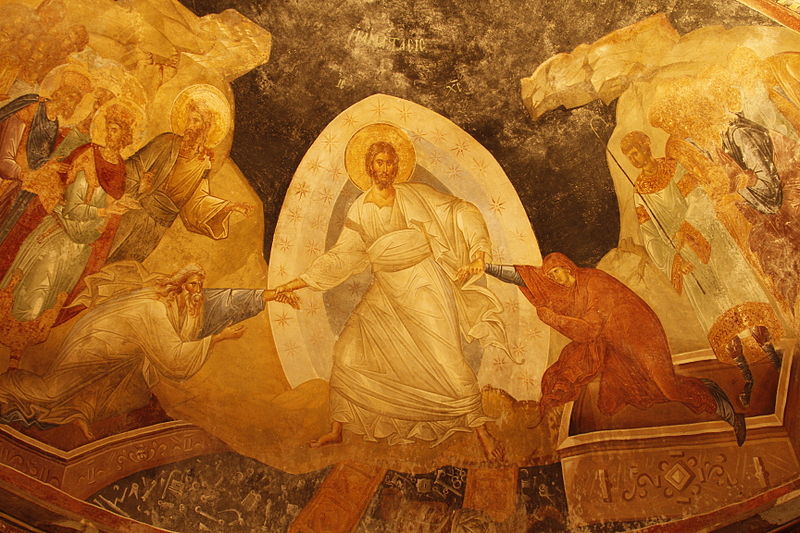
File:Anastasis at Chora.jpg
© José Luiz Bernardes Ribeiro / CC BY-SA 3.0


Sources

Anselmus. Basic Writings: Proslogium. Monologium. Cur Deus Homo. Gaunilo’s In Behalf of the Fool. 2. ed. Open Court Classics. LaSalle, Ill: Open Court Publ, 1962.

Davies, J. G., ed. The New Westminster Dictionary of Liturgy and Worship. 1st American ed. Philadelphia: Westminster Press, 1986.

Luther, Martin, Jaroslav Jan Pelikan, and Helmut T. Lehmann. Luther’s Works. 51: Sermons: 1. American ed. Saint Louis, Mo.: Concordia Publ. House [u.a.], 1959.


More Days for Praise: Festivals and Commemorations in Evangelical Lutheran Worship. Minneapolis, MN: Augsburg Fortress, 2016.