Sunday, March 26, 2017

Turning a Blind Eye

John 9

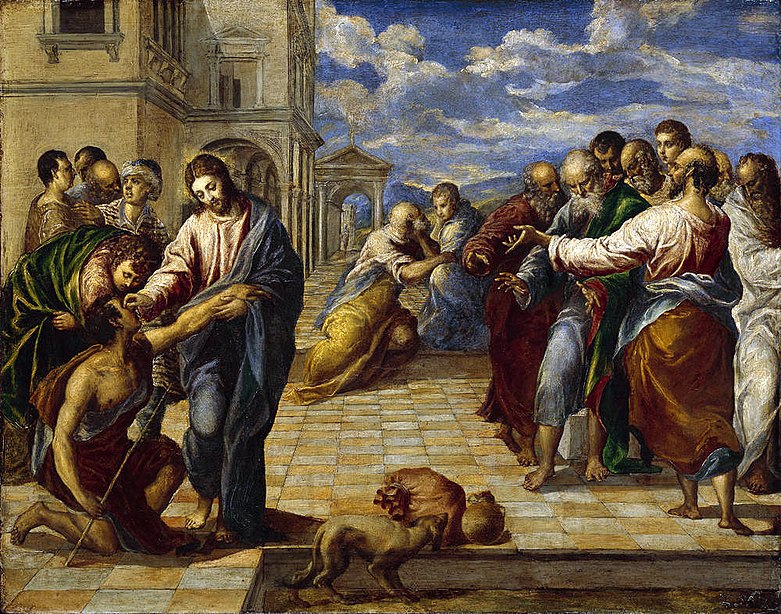
File:La curacion del ciego El Greco Dresde.jpg
Christ Healing the Blind, El Greco 1567 PD


What are you; BLIND!?

This is a question that has been adopted as a phrase to voice our discontent with behaviors and actions we don’t really approve of. 

As a parent when I ask my children to clean up, I seem to find myself asking this question flippantly, 

Usually receiving the response from my children which proves sarcasm should not be wasted on the young; 

“Why no, Daddy, I can see just fine!”

I also find myself asking this question as I drive from place to place, observing drivers that are either incapable of driving courteously or sometimes incapable of driving at all. 

Interestingly, I find myself asking and even making accusations of blindness more often during this particular month every year or so. 

During March Madness, whenever the West Virginia Mountaineers make it far enough into the NCAA Tournament, I find myself becoming a basketball fan. 

Basketball, a sport which has rules that I honestly know about as well as the rules for cheese rolling or cricket. 

Yet, if WVU ends up in the Sweet 16, I seem to find myself becoming the foremost authority on the game, which I have not only never played but avoided for fear of looking like a fool. 

But there I am, sitting on the couch accusing the officials of blindness and demanding that the officials give my Mountaineers a free kick, an additional 15 yards for roughing the passer, or just outright appalled that the ball was called foul despite the fact that it was clearly not over the line. 

In spite of how all this sounds to you, I honestly have no idea how to play basketball, I just want to root for my Mountaineers. 

Yet, as incompetent as I am when it comes to basketball, I seem to make pejorative claims of others ability to see. 

Thinking that I know so much more than I really do, that I can see so much clearer than anyone else. 

Sitting on my couch in my own home, I can’t help but wonder, who do I think I am fooling?

No one, just myself….
~

Our gospel for today addresses blindness. 

It also addresses sight but not just sight.

File:Healing of the Blind Man by Jesus Christ.jpg
Healing of the Blind Man, Carl Heinrich Bloch 1834-1890 PD
It addresses intuition, a word rooted in Latin that really means to look into, or inside of something. 

It is more than just seeing that is being addressed in our gospel today. It is a deeper perception of something below the surface of what is before us. 

It is also a LONG gospel reading. 

Forty one verses to be exact, with only two verses (7&8) describing the miracle itself. 

Yet we find ourselves doing what we always do, focusing on the miracle and losing sight of the surrounding story. 

A story that contains thirty five verses that reveal the beauty of the slow process of this man’s sight being FULLY restored. 

Thirty nine versus that also illustrate the degrees of blindness in others, as well as ourselves. 

There is a progression to the restoration of the beggar’s sight because Jesus comes to the beggar faceless at the time of their meeting, because the beggar is still blind. 

He does not know the face of the one who performs the miracle, only the name; Jesus. 

So, when he is brought to the Pharisees by his neighbors in order to discover the source of this miracle, perhaps even the validity of it, he has very little to go on. 

Questioned first by his neighbors as to the identity of the man who has healed him, he simply refers to Jesus as “a man called Jesus.”

In the midst of his interrogation at the hands of the Pharisees though, he seems to have looked deeper into what has transpired, looking deeper into just who Jesus is. 

The beggar, upon being asked what he himself has to say about this man, further reflects on just what has happened, and it dawns on him that this must be the work of God. 

Ironically, this realization seems to have come to him as much from the skeptical questioning of the Pharisees as it has from his own heart. 

He is an honest man, responding to the questions with not only integrity but with his own sense of curiosity. 

A desire to know just what has transpired for himself. 

And when he returns to the Pharisees, his certainty of Jesus’ work as the work of God is affirmed. 

Not by his own deep questioning, but by receiving more of the skeptical and even militant questioning of others. 

Standing by his claim to the point of scorn and mockery, even being driven out of this Pharisaic court for no other reason than the persistence of his belief. 

Ridiculed because he was willing to process the evidence of what has been shown clearly to him, not by Jesus, but by his inquisitors. 

Evidence that he is willing to truly see, even as others turn away. 

Because, others have learned to close their eyes to what they choose not to see. 

Perhaps, because they have seen too much? 

And maybe that has made them blind? 


Another image that is found in this passage is one we have heard several times since Christmas. 

It is a persistent theme in John’s Gospel; Jesus as the light of the world. 

In all honesty, given the frequency with which we have talked about this theme I wasn’t certain it was important to address this week. 

At least not until I considered the role light plays regarding our sight. 


Photo by Nelly Volkovich, Picture provided through Unsplash


Science is not my strong suit, but you don’t have to be a scientist to appreciate the incredible nature of the human eye. 

Not only because of what the human eye can do, but what we have done with the human eye. 

Human beings are the only creatures on earth that are as capable of seeing as far beyond of what they can comprehend as we are. 

We are also the only creatures that can see as deeply into the things around us as we can, even our own bodies. 

We can see beyond our own planet, even the galaxy, in which we live. 

We can see our own cells, viruses, even atoms!

And yet the more we see, the more curious we are and the more we want to see. 

And the key to all this is LIGHT. 

They say that eyes are the windows to the world. 

And that is more true than we sometimes realize. 

Because the lenses on our eyes allow the light that is reflected off the world to enter into the eye and our pupils control the amount of light that enters into the eye, controlling our focus. 

The light that is reflected from our surroundings is projected onto our retina and that is what allows us to see the world. 

It is in this same way that Jesus Christ reflects the Incomprehensible into our world, into our lives. 

God, which is so far beyond what we can grasp is reflected into our lives by Christ. 

But only if we are willing to open our eyes to that light, because if we shut our eyes tightly in spite of that light or to the world around us; 

We might as well be blind. 

~

This story offers a deep contrast to the unveiling of the beggar’s own sight. 

There are three other groups that seem to be struggling with sight through most of the scenes in this story where Jesus and his disciples are mostly absent. 

The crowd who cannot believe what they are seeing. 

Seeking excuses and reasons that deny what is clearly standing before them. 


Perhaps having seen so much of the reality of the world around them, that they refuse to believe such a good thing as this could occur to such a man. 


Denying his very identity, even accusing him of being a stand in or lookalike. 

Perhaps jaded by what they have seen in the world. 

So pessimistic that they have come to refuse that God can be at work in so low of a place as the eyes of a blind beggar. 

Refusing to reconcile a God that can be at work for good in all things, even those things the world seems to have lost interest in or has no time for, like the poor. 

Then there are the parents of the beggar who do not deny their son. 

They admit that it is their child and that he has come to find his sight, but they turn their own blind eye to the situation. 

Turning a blind eye to the questions of not only others but their own questions. 

They must know that such questions will not go away and yet they refuse to even entertain the most basic question; how such a thing as this has occurred?

File:Duccio di Buoninsegna - Healing of the Blind Man - WGA06779.jpg
Healing of the Blind Man, Duccio 1308-1311 (PD)
Certainly not avoiding the question because it has not arisen in their own minds, but because they fear the answer. 

An answer that will cast them out of the synagogue, out of their social circles, out of the worldly graces of their own society. 


Far too risky of a question to ask if it can be avoided. 

So they choose to deny the very reality of what has happened, retreating to a position of blindness. 

And then we have a group of Pharisees who have organized themselves into a kangaroo court. 

They have made their judgment before the beggar even arrives in their court on his first visit.

Then on his second and final visit even dictating TO the beggar what has “officially” transpired during his healing. 

Sharing the good news with the beggar that he HAS been healed by God and should give glory to God but advising that such a judgment by the court will include the accusation of Jesus as a sinner. 

The court doesn’t offer a judgement to the beggar, they offer two options:

Confess that Jesus is a sinner and a fraud

Or 

Oppose the court’s judgment and be accused and cast out himself as a sinner. 

And so; 

the beggar is driven out. 
~

So, where do we find ourselves in this story?

I would say that a healthy dose of skepticism in the midst of our faith is merely a reflection of authenticity and honesty. 

The same authenticity and honesty that leads the beggar to find himself slowly confessing his faith to Jesus when he gazes upon Christ’s face for the first time. 

A faith that is tested by honest and thorough questioning. 

But that is a fine line to walk, isn’t it?

Because if we see too much of the world, we find ourselves blinded by how broken it all is. 

Refusing to believe in anything. 

This is a far cry from healthy skepticism, it is unbelief and it leads to hopelessness and despair. 

So, we could always protect ourselves with naivety and an overabundance of optimism. 

Now this, this is what we love as the church. 

Rose colored glasses and care bears sliding down rainbows. 

But is that the reality of the world outside the walls of the church?

A world where only sinners are tried by the afflictions of the world and we chosen few are protected by God’s merciful hand as compensation for our regular attendance and generous donations?

Sisters and brothers, I am CERTAIN there are a few of you out there who cannot accept this to be true, I know I can’t. 

The fact is that we see what we WANT too see of the world. 

And this leads us into either a blindness of unbelief or the invisibility of irrelevance. 

We are called to be a church that is faithful to the promise that is true AND relevant in a world that needs that assurance now more than ever!

And if we board up the windows of our sanctuary, it may deny the ugliness of the world outside, but it will also deny the light of that same world that shines so brilliantly through, bringing us the hope that WE so crave!
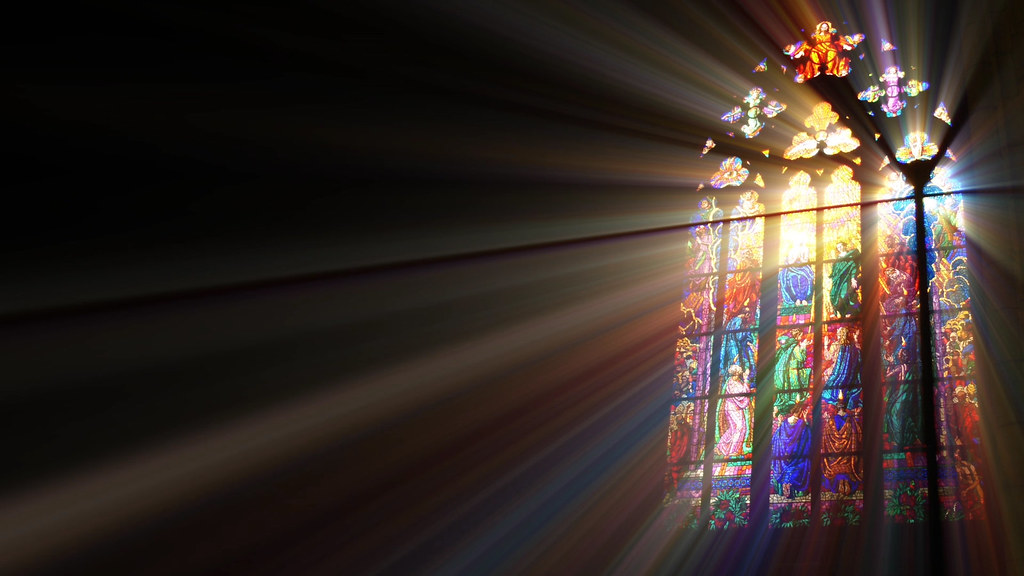
www.stockphotosforfree.com/

We are all blind to certain realities.

So jaded, we refuse to see the beauty of the world.

So naive, we refuse to see the ugliness of the world.

So superstitious, we refuse to question.

So pessimistic, we refuse to believe.

But for us to truly see we must not only see the world but see into the world, embracing a promise from the Kingdom of God that exists also in the broken Kingdom of man. 

Because true sight is the wholeness of seeing two kingdoms. 

This leads to seeing it all together and when it is all brought together, the wholeness of the world can lead us to seeing the holiness of God, 

And that is not only a faith that is tested but a faith that is authentic, honest, and rooted in the cross of Christ +. 
~

This past week there was a lot going on. 

In the midst of a busy week, my wife and I received a number of messages on Tuesday morning, concerning some close family friends, one of which was far more than just a mentor to me. 

We came to discover that their daughter had died after a struggle with addiction. 

Addiction to a drug that I regularly encountered as a police officer, a drug that became my worst fear after encountering both the substance and its victims. 

And when I heard the news my heart sank into the pit of my stomach. 

I’ve struggled to think clearly this week because I found myself asking how?

How for so many years did I not see? 

Even as I was executing search warrants, dealing with others who were  addicted to that substance? 

How was I so blind as I interacted with their daughter almost weekly?!

If only I had seen, I could have done something, maybe I could have supported them more than I did. 

But I didn’t see, even now, looking back, I cannot see it. 

As a police officer, we used to talk about the bubble that the rest of our communities live in, isolating themselves from the world in a state of ignorant bliss. 

It didn't take long after my resignation from the department to find myself comfortable in that bubble, even admitting to old friends that I now willingly ignored what I knew was going on in the neighborhoods that were just a block from the seminary where I was studying. 

Now, I am not sharing this story to gain your sympathy, but I need you to hear that no matter how much we see or how much we think we know, we all turn a blind eye to what we don't want to see. We all have a tendency to see what we WANT to see and perhaps this Pharisee has chosen blindness too long, because Christ’s light needs to be seen in those dark places that we turn a blind eye to, and in our baptisms we are called to be the candles that carry that light into those places. 

Amen. 

Free Commercial Use from Pixabay (No attribution found or required)


Sunday, March 12, 2017

Faith; A Road to Nowhere

Genesis 12:1-4, Romans 4:1-17, and John 3: 1-17

Courtesy of Unsplash Public Domain Stock Photos

My wife and I have found that these days we only recognize two categories of time in our lives. 

I like to refer to these two time periods as BK and AK. 

There is an extensive period of time before we met, before we were married, before we lived in certain places, even before we had certain jobs. 

But the period of time that radically changed our entire lives was not the completion of our varying levels of education, our moving into our first home, or even our marriage but that AK period. 

These two time periods are Before Kids and After Kids. 

Having children changed every single facet of our lives. 

Adventurous cooking, cuisine, drinks, art, all seem to have no place in our household any longer. 

Even “adult programming” as we have come to call it, has become a rare treat for us. 

And while I can deal with cartoons and chicken nuggets, rather than Game of Thrones and a nice ribeye, “After Kids” travel is the one piece of our lives that makes us miss that BK period more than anything. 

It isn’t that we don’t want to spend time with our kids, we do. 

We love having time with our kids, especially when we are on vacation. 

But what is particularly difficult is getting there in the first place. 

Car seats, toys, diapers, toys, utensils, toys, kid friendly food that won't make too big of a mess, toys. 

By the time you have the car packed it is a wonder that we can even fit ourselves into the vehicle. 

And if you forget something on the way home; MAJOR MELTDOWN, every-time!

Even traveling to someone else’s home for a meal is a fiasco. 

Usually, it has more to do with the stuff you must bring than the kids themselves. 

Traveling After Kids, no matter the distance, is a burden. 

~
The Caravan of Abraham
James Tissot, 1903 (PD)

In our first lesson today, the story we hear about Abram is the very beginning of his journey. 

It is a journey in which Abram is called to clearly break away from all the burdens of his stuff, freeing himself from his land, his people, and his lineage. 

This would essentially strip Abram of every single thing of value in a nomadic society. 

And he isn’t just breaking free of things, but he is breaking free of his very identity and culture. 

When we read this story, we most often think of Abram’s faith as a response to a definitive promise made by God. 

But God’s promise is anything but definitive or obvious. 

God commands Abram to begin this journey; to nowhere. 

God demands Abram sever all ties from everything he knows and then promises that if he does this, God will let him see the land that God will …SHOW to Abram. 

That may be the chance of a lifetime for a photographer or a painter but giving up all you have to just catch a glimpse of some patch of land doesn’t seem to be a decent tradeoff for all Abram is giving up. 

Abram isn’t just traveling light. He is putting himself in the most precarious position imaginable. 

This almost seems impulsive. 

It seems like a decision that lacks any rational thought, especially for that day and age, regardless of whether it is before kids or after kids. 

And you would think that the next two verses would sweeten the pot a bit for Abram, but they don’t really. 

God promises him that a great nation will be made FROM Abram, 

Like a plant that sprouts from a seed, but there is no assurance that Abram himself will see any such nation. 

And if you skip to the end, you’ll find that Abram indeed does not see such a nation. 

God goes on and promises to bless Abram and make his name great, but the language shows these are continuous actions that will occur beyond Abram’s life, so again, these are blessings that may not occur in Abram’s own lifetime. 

Again, if you skip to the end, you’ll find Abram indeed never witnesses this come to full fruition either. 
It goes on like this throughout the text, promises are made to Abram by God for taking this action, but these are great promises that Abram won't see come to fulfillment because Abram serves as the seed of all these blessings. 

Blessings that will not be bestowed to Abram specifically, but to those who “will bless themselves” to him. 

Seems a bit like taking credit for something someone else does, doesn’t it?

It would appear Abram does all the work, and those who claim to be Abram’s children will reap the rewards.

Abram is never blessed for his own sake but for the sake of others.

Not the best deal, considering all that he is giving up. 

Yet, Abram responds to the command obediently, with one caveat, he ends up with Lot as a tag along. 

How’s that for breaking away from your father’s house?

And Lot will turn out to be a lot more baggage than Abram anticipated. 

Lot will be such a burden that this may be why God told Abram to leave his father’s household behind in the first place.

Even with all Abram faithfully gave up, the one thing he wouldn’t let go of seems to weigh him down far more than he could have imagined. 

Because Lot turns out to be more trouble than Abram bargained for. 

~

I’ve told a few people here at St Michael when I first arrived and I knew that many of you had heard the same thing from Stephen when I saw the eye rolls, but Lent is truly my favorite time of year. 

I can’t speak for Stephen as to why it is his favorite season but for me, I love Lent because it is not about where Lent leads us but the journey that we are taking in the first place. 

Because in all honesty, if this road we take at Lent really did end at the cross for all of us, would we really want Lent to end at all?

Courtesy of Unsplash Public Domain Stock Photos

In 1985 the band Talking Heads released their single “Road to Nowhere”.

The writer and lead singer for the Talking Heads, David Byrne said that he wrote the song as a joyful look at the impending end of our lives, a joyful approach to the looming nature of our limited mortality. 

“We're on a road to nowhere
Come on inside
Taking that ride to nowhere
We'll take that ride
I'm feeling okay this morning
And you know
We're on the road to paradise
Here we go, here we go”

It seems to capture the nature of not only Lent, but the beginning of Abram’s faith journey. 

Abram is taking the road to nowhere, a road that leads to a set of ambiguous promises, that really aren’t even meant for him specifically. 

And his journey is more than just a story, it is a metaphor for faith, not just for Abram but for us as well. 

Lent is not about the perfect journey and our faith is never really fully perfected. 

But the joy in our lives is not just where we are going to end up, but the road we take to get there. 

And sometimes, the burdens we carry with us become as much a part of that journey as the destination itself. 

~

Much like Abram, Nicodemus is carrying a little dead weight on his own journey in the Gospel for today. 

Nicodemus is a Pharisee and a member of an elite class of aristocracy known as the Sanhedrin.  

A class of religious elite that will judge Jesus’ actions on numerous occasions, to include their recommendation to Pilate to crucify Jesus. 

In fact, Nicodemus himself will be engaged in a debate over Jesus with the Sanhedrin in a few chapters (John 7:51).

But in this story, we are told of how Nicodemus comes to Jesus to confess his faith in Jesus’ mission. 

He professes his faith that Jesus is a teacher from God, even submitting himself to Jesus when Nicodemus refers to Jesus as “Rabbi”, basically submitting to Jesus as his own teacher. 

This would make Jesus the teacher of one most learned members of the religious elite class. 

But Jesus’ response to this confession of faith is surprising. 

He essentially responds to this confession of faith with a warning. 

Christ and Nicodemus, Fritz von Uhde 1896 (PD)
A warning that there is quite a bit more that will be required of Nicodemus. 

The issue is not his role as a Pharisee or even his participation in the Sanhedrin. 

And while many would like to believe that this passage points explicitly to baptism, it points far beyond our baptism. 

Jesus’ response is prompted by a confession from Nicodemus that is grounded in the works of Jesus, the miracles Jesus has performed. 

And Jesus is warning Nicodemus that he is searching through laws, and stories, and miracles that point to the concrete reality of this world. 

Things that Nicodemus can see. Things that Nicodemus can comprehend. 

Nicodemus is confessing a faith that is grounded in a journey that has a definitive destination. 

Nicodemus is confessing a faith that is grounded in a carefully plotted route. 

He is confessing a faith that is grounded in certainty. 

This is a far cry from a road to nowhere. 

Jesus declares to Nicodemus a journey that begins in the water and the Spirit, but much like the wind that blows, he assures Nicodemus that faith is meant to be something that takes us on a path and to a place that we cannot fully grasp. 

Jesus calls Nicodemus to an ambiguous faith that comes and goes from a place we do not know. 

Probably about as comfortable for Nicodemus as it is for us, right?

Because we like to deal in concrete facts, in definitive reality. 

We want the map and we want to know where it leads. 

But faith doesn’t work that way, because faith is grounded in a reality far beyond the one we see. 

And that is why Jesus calls Nicodemus, and us, to an uncertain faith. 

A faith that questions where we are going, how we are getting there, what exactly it is we believe in. 

A faith that questions things and a faith that sometimes doubts things. 

A faith that sometimes falls flat on its face when we dig into the freezer at 3 AM with nothing but a spoon and a carton of chocolate chip cookie dough ice cream in spite of our Lenten pledge to give up sweets. 
~
This past Wednesday was International Women’s Day. 

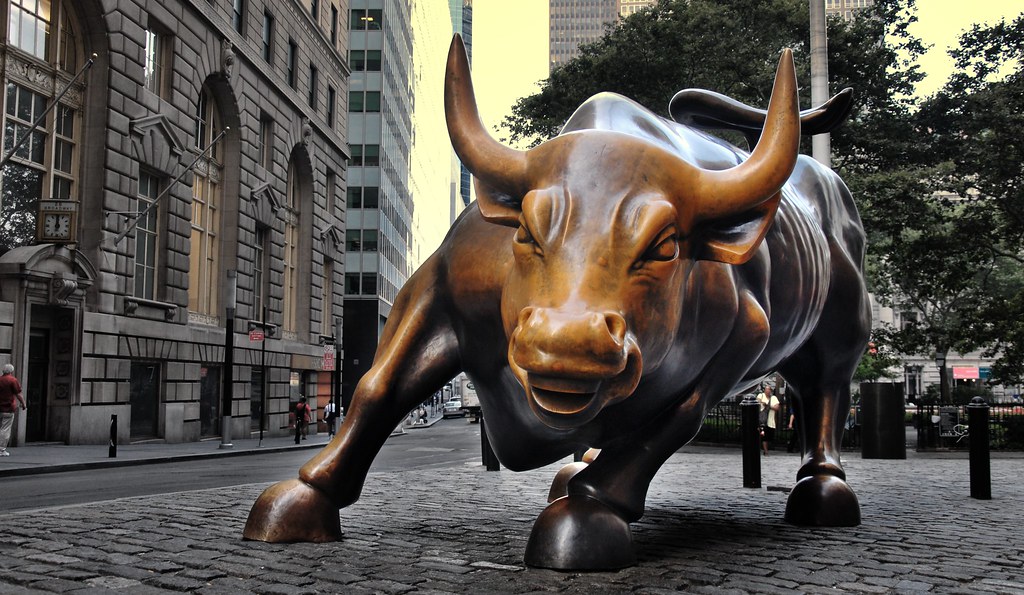
People recognized this day in a variety of ways but on Wall Street, where the iconic bronze bull statue stands, a new statue appeared to commemorate the day. 

It was another bronze statue standing opposite of the bull. 

The bull was standing as if it were preparing to charge the subject. 

Image result for charging bull
Public Domain photo courtesy of flikr
Photo by Sam Valadi, July 22, 2011

Given the size differential of the two figures, the bull appeared to be the clear favorite if the two statues took on a life of their own. 

The statue standing in opposition to the bull was modest in size comparatively to this powerful animal. 

Not only was this statue comparatively undersized in contrast to the Bull, but it was the statue of a little girl, no more than 8 years old. 

She stands fearlessly, with her hands on her hips and her chin raised upwards. 

Her feet planted firmly beneath her with her ponytail blowing in the wind, and her eyes affixed on the bull that is towering over her. 

Standing firmly in the face of what would logically be foreseen as a catastrophic outcome, if these two bronze figures were flesh and blood. 

Yet there she stands, in the face of doubt, in the face of the odds that stand against her, not denying these odds or doubts but facing them confidently, honestly, and faithfully.

This is the kind of faith that Abram is called to grow into, this is the kind of faith that Nicodemus is called to seek. 

An authentic, honest, and courageous faith that stands in the face of all challenges, rather than escaping to the smoke and mirrors we so often seek out to protect our faith.  

Faith isn’t BLIND if it is authentic, faith looks into the eyes of doubt, uncertainty, and the questions the world rightfully demands we answer as the church.

It doesn’t mean we always have the answers but it means we engage the questions. 
And sometimes those questions lead us to somewhere, sometimes somewhere we cannot quite describe. 

But sometimes it leads us to nowhere, and we can’t be lost in the middle of nowhere if that is exactly where God has called us to be. 

Faith, Lent, and yes LIFE is about this grand glorious road to nowhere. 

Because we don’t really know where we are going or where faith will take us. 

And sometimes there are some heavy crosses that we carry with us on that road, but we can be confident that in end of that journey we are assured we won't be hung from those crosses, because He's already there. 


Amen


Christ Crucified, Diego Velázquez 1632 (PD)


Sources


Byrne, D. (1985). Road to Nowhere. [AAC file] Sigma Sound Studios in Manhattan: Warner Bros./Sire Records.


Chan, M. (2017). Thousands Want the Wall Street’s Fearless Girl Statue to Become Permanent. [online] Fortune.com. Available at: http://fortune.com/2017/03/10/fearless-girl-statue-wall-street-bull-petition/ [Accessed 11 Mar. 2017].

Sunday, February 26, 2017

Coming Down Off Our Mountains

Exodus 24:12-18 and Matthew 17:1-9

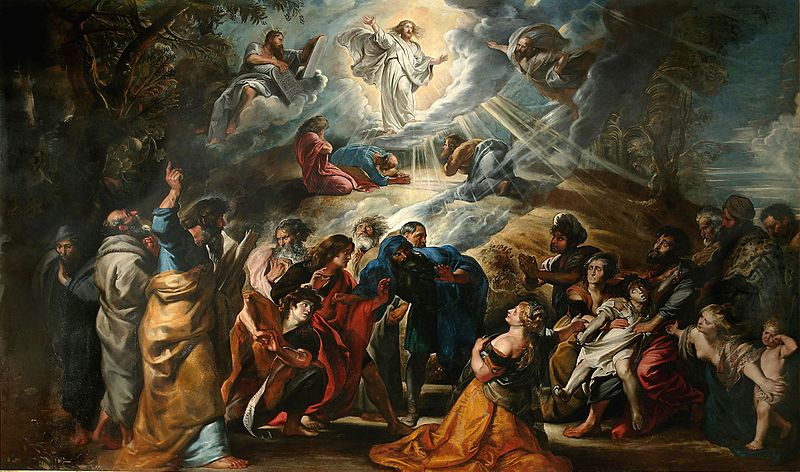
File:Transfiguration-Rubens.JPG
Peter Paul Rubens, La Transfiguration 1605 (Public Domain)

One day in the Appalachian hills of Virginia a hobo was walking along the train tracks waiting for another train to come his way.

As he was walking along, he found himself drawn to the sound of some commotion near the waters of the Shenandoah river. 

A bit intoxicated, he decided to investigate a little closer to see if his ears were playing tricks on him. 

He stumbled down the steep river bank and found a large congregation gathered at the waters edge, being plunged into the water one by one led by a charismatic itinerant preacher. 

Curiously, the drunken hobo found himself mixed in with the crowd and when he accidentally made his way to the front of the line, the preacher asked if he was ready to find Jesus. 

“…Okay…. I guess so?” came his reply.

In one swift and violent motion the hobo found himself plunged backwards into the cold water. 

As he was brought back to the surface just as violently, gasping desperately for air the preacher asked him; 

“Have you found Jesus, my brother?!”

“No, not yet!” replied the confused man.

Frustrated, yet determined the preacher again plunged the man back into the cold waters for a second time, holding him down a few seconds longer before jerking him back to the surface. 

“Have you found Jesus NOW, my brother?!!” again questioned the preacher.

Hesitant, confused, and now a bit scared the man replied; 

“Uh, I… don’t think I, um… found…”

Then WHAM, the preacher plunged the man backwards a third time into the cold water, holding him there until his legs were kicking out of the water and his arms began to desperately grasp for the preacher’s robe. 

When the man emerged for a third time from beneath the cold waters, shaking from fear as much as the cold itself, gasping for air, the preacher asked him once more; 

“Did you find Jesus?!”

The now terrified man responded, 

“I done my part and looked three times now! Ain’t nobody down there so I suggest you take the next feller a bit further up yonder!”

~

People define what is holy or sacred in many different ways. 

People also seem to find God in many different ways, different places, and at different times in their lives. 

What is holy to one may not necessarily seem particularly holy to another. 

In both the first lesson and the gospel for today, they both seem to point to similar settings as something “holy”.

They both occur on mountaintops. 

Mountaintops, places considered sacred throughout scripture but also places that continue to draw many who are seeking a spiritual encounter today as well. 

Anyone who has ever had the opportunity to hike or climb to the peak of even the most modest of mountains can attest to the splendor and majesty of a mountain overlook. 

Growing up, my favorite overnight backpacking spot was in the Minister Creek Wilderness area, near Warren, Pennsylvania. 

There is just something that seems to make us feel as if we are closer to the Divine when we are surrounded by the seclusion and immensity of a panoramic wilderness view. 

Perhaps it is being able to capture the scale of our humble stature comparatively to the immensity of such a scene?

It certainly makes us feel quite small, but then again, so should God. 

File:Gérôme, Jean-Léon - Moses on Mount Sinai Jean-Léon Gérôme -1895-1900.jpg
Jean-Léon Gérôme, Moses on Mount Sinai, 1895-1900 (Public Domain)

Maybe that is why mountaintops and high places were considered holy places by all the cultures of the ancient near east, especially the area of Palestine and Israel.

And when Moses is called to the mountaintop, each time, it is considered to be a holy place, sacred ground. 

Not just because it is a mountaintop but because God is physically present there with Moses. 

And while this is not the first private court Moses attends as God’s guest, there is a special reason for this invitation. 

Moses is given the plans for constructing the tabernacle and the ark of the covenant. 

The tabernacle which is a sacred tent that will serve as the holiest place of all for the Israelites until the Temple is built by Solomon much later. 

It is a sacred place they will carry with them throughout their wilderness journey. 

Carrying it as they march on to the land they have been promised, setting up the tent, the tabernacle, along the way so that God may be present with the people as they go along their way. 

Breaking down the tent and putting it up again, as they move from place to place. 

A tedious chore that must be completed in a specific and precise way. 

Moses is also given the blueprint for the ark of the covenant, another sacred object that is sometimes better known for its role in the story of Indiana Jones, than the one we hear today. 

It serves as God’s throne or seat. 

A royal throne for God to not only sit, but like the tabernacle, it will serve as the means by which God will be with and among the people. 

And so, we find Moses climbing to the top of the mountain, not only seeking God but being given the means to bring God to the people. 

A people who have disobeyed God already. 

A people who do not even have respect for the leader who served as their liberator from slavery; Moses. 

I can’t imagine Moses considered this to be a good plan. 

After all, serving as the medium between God and the Israelites had allowed Moses to negotiate for the people when they fell in God’s disfavor. 

But God living among the Israelites must have seemed like inviting your parents to live in the barracks or a frat house!

If we consider it from this angle, perhaps we wouldn’t ask why he remained on that mountaintop for 40 days. 

The question we should ask is why did he ever come down?

Knowing that these were a people unworthy of God’s presence. 

Unable to truly grasp what Moses experienced on that mountain. 

Unable to grasp what it meant to be in the presence of what is truly sacred, truly holy. 


File:Figures The erection of the Tabernacle and the Sacred vessels.jpg
Illustration from the 1728 Figures de la Bible; illustrated by Gerard Hoet (1648–1733) and others
published by P. de Hondt in The Hague;
image courtesy Bizzell Bible Collection, University of Oklahoma Libraries (Public Domain)

~
Our Gospel for today presents a similar challenge from a very different perspective. 

Jesus has just foretold his humiliation, crucifixion, and death. 

He has also foretold the suffering of his own disciples. 

Following this prophecy, six days later, he leads them up a mountain. 

He leads them to bear witness to something holy, sacred ground on yet another mountaintop. 

And it is there that Jesus reveals to three of his disciples, James, John, and Peter, just what and who is about to be humiliated, crucified, and killed. 

But I am not so sure that is what is on Peter’s mind at the transfiguration. 

Because this word, transfiguration, describes a completely altered physical state, one that undeniably shows Peter, James, and John that Jesus is unmistakably divine. 

The words of Jesus that they have just heard, days ago, foretelling of his death must have certainly been cancelled out at this point. 

For Peter, James, and John, this holy moment, this sacred ground changes EVERYTHING. 

Because for them, this is the promise and the hope they have longed for, since the time of their ancestor's slavery, their ancestor's exile, the occupation of their lands, and the oppression of their people. 

It is in this moment that they believe they have fully experienced the holiest ground, the most sacred point in not only their own lives but in the lives of all people. 

So why wouldn’t Peter want to build three tabernacles?

One for Elijah, the greatest of all prophets,

Another for Moses, the bearer of God’s law,

And one for Jesus, who Peter can now confirm without a doubt is THE Messiah. 

File:Duccio di Buoninsegna - Transfiguration - WGA06780.jpg
Duccio, Transfiguration 1308-1311 (Public Domain)

Because, this is the way the world wants to see it all go down. 

Today, we still want a God that rules over us, controlling our destiny, dictating our fates from a high holy throne on some mountaintop. 

Probably the very way Moses would have preferred to have it. 

We want our own sacred moments, holy mountain top experiences, to be the pinnacle of our faith life. 

We want others to recognize our holy mountain top experiences as some divine endorsement of our own special faith that exceeds the faith of others who don’t see things the way we see it. 

We want a faith that can be dictated to us, rather than a faith that calls us to participate in not only the life but the death of Jesus Christ. 

And so, I cannot imagine Peter’s disappointment as he is trudging back down that mountain knowing that what was foretold has not changed at all. 

Just like we, too, find ourselves disappointed when we declare particular moments in our own lives' pinnacle holy moments. 

Because when we plant our faith in one moment on the top of a mountain, our faith becomes unchallenged and stagnant. 

A faith based in mere feeling, unchallenged by the valleys of our sorrow, untested by the cliffs of our pain. 

That is the very reason that the transfiguration of our Lord is the Sunday that closes out the revelation of our Lord through Epiphany, and nudges us onward as be begin our journey through Lent to the cross. 

Because it is not just on the mountaintops we are called to find God, not just in our high moments, but in the low ones as well. 

~

Twelve years ago, my best friend led me up onto a rooftop. 

Not quite a mountain, but it felt like we had just climbed one together. 

Iraq 2005, Brothers

After spending months patrolling together, we had grown closer than two brothers could be. 

We had been brought back to our small forward operating base after our relief had taken our place so that we could rotate back to the states. 

After spending many months in sparse and unsanitary conditions, experiencing sickness, fear, violence, and uncertainty, we sat on that rooftop, overlooking a city we had invaded. 

A city that we weren’t sure we would even survive, much less both of us. 

And as we sat there, my best friend, my brother, said to me, 

“No matter what happens in life, nothing will ever stack up to this. You will always be able to look back at this moment, looking out over that city and know that you survived that. Nothing will ever compare to this moment, right now. Now, all we have to do is take one more ride on these roads and we are home.”

I didn’t just believe in what he said, he was using the very words I was thinking in my own head. 

It was our mountaintop experience. 

And there have been days when I’ve wanted to be sitting on that roof with him, knowing that we had survived, knowing that we had another chance to make something great out of ourselves because we’d somehow made it. 

But if we’d have always tried to get back to that rooftop, we’d have never taken the chance to become husbands and fathers.

And if we’d both lived our lives on that rooftop, we could have never shared the joy that we share together in our lives and calls today. 

To top it all off if we’d have kept trying to get back to that rooftop, I’d have never met my brother’s child for the first time this weekend. 


In New Valleys and Mountaintops, but still brothers today.
And all these valleys, hills, and yes other mountains do stack up to that moment on that roof. 

~

Sisters and brothers, we cannot place our faith, our hopes, or our expectations in a single solitary moment on a roof or a mountain. 

If we do that faith remains a stagnant dead thing and our faith is not something meant to be caged in a single nostalgic moment. 

It is a living thing meant to thrive in the valleys that will sometimes lead to the crosses we will have to bear. 

Because God is among us and God seeks us out in many more places than just the mountaintop moments.

And as we come down off the mountain today, let us prepare ourselves for the road that will lead us to that cross+ where we will find God, among us.

Amen


File:Andrea Di Bartolo - Christ on the Road to Calvary - WGA00419.jpg
Andrea di Bartolo,
Christ on the Road to Calvary 14-15-1420 (Public Domain)


Sources

Kasdan, Lawrence, George Lucas, and Phillip Kaufman. Raiders of the Lost Ark. Directed by Steven Speilberg. Hollywood, California: Paramount Pictures, 1981. Film.