Sunday, March 27, 2016

There is NO STONE!


Luke 24: 1-12

The Empty Tomb by Ghislaine Howard

On November 22nd 1718, British officer Lieutenant Robert Maynard  -who was financed by the Virginia colony- located and engaged the pirate ship he had been charged with hunting down.

The vessel belonged to Edward Teach. 

Teach was not the most successful pirate in history. 

The pirate Henry Every accrued enough wealth to retire from piracy, although his whereabouts went unknown and his final days are unaccounted for. 

Bartholomew Roberts was estimated to have taken five times the plunder of Teach, through acts of piracy, but his legacy is also shadowed by that of Edward Teach, a pirate captain better known as Blackbeard. 

Blackbeard has been portrayed as a tyrannical monster, but most historical accounts corroborate that his image was exaggerated greatly, because his intention was to be as much a legend as a man. 

But on November 22nd 1718, when the smoke cleared, Lieutenant Maynard stood victorious. 

Teach and Maynard
in combat
He sent Blackbeard’s surviving crew members here to Williamsburg to be tried for piracy but Blackbeard was not among them. 

As many tell it, Lieutenant Maynard personally defeated Blackbeard in battle, but many claimed that the body was thrown into the ocean, where it swam circles around the vessel before disappearing into the ocean depths. 

To this day, legends of his ghost are told by sailors, and his story is told and retold in literature, movies, and music. 

All this because Lieutenant Maynard allowed Blackbeard’s body to disappear into the sea, where the legend of Blackbeard lives on. 

Lieutenant Maynard may have won the battle, but I would argue that Blackbeard won the war. 

Maynard only defeated the man Edward Teach, but the legend of Blackbeard lives on to this day, undefeated. 

The strongest military empires, even those who have no equal, have one weakness; 

Enemies who cannot be defeated by death. 

This is why in Matthew’s account, he describes how Pilate assigned a guard to the tomb. 

Pilate wants to ensure that  the body of Jesus remains in that tomb, preserving the power Rome holds over all people throughout the empire, the power and authority to take life.

And the women from Galilee in Luke’s Gospel are equally concerned about the presence of that dead body. 

No different than any of us today, they need to see the body, to grieve over the body, and to come to terms with the death of the man. 

Today we encourage this experience as the way we begin the process of grieving, especially under tragic circumstances when shock has set in. 

And these women are certainly in shock.

They have either directly witnessed the crucifixion of Jesus or at least heard the tale.

The desecration of his body and the humiliation that he had experienced is still fresh in their minds. 

The body was, most likely, rushed off to the tomb, given the timing, if not for the sake of purification laws, for the sake of ensuring that religious and Roman order is restored to the territory. 

So they were certainly in a rush to ensure Jesus is given the proper respect and to attempt to reconcile the humiliation of his death by offering a proper burial. 

Gathering up the right ointments and spices, expensive investments that were considered important for ensuring the purification of the body. 

And on top of it all, there’s a need to see his body. 

To really and truly know that he is gone. 

To begin their time of grief. 

Certainly, they are all grieving. 

This was to be the Messiah, the hope of not only Israel, but if they had believed what Jesus said, the hope of the world. 

And as the sun descended that Friday, they had taken that hope and chalked it up as a missed opportunity. 

Just another in a long line of false Messiah’s. 

Other’s had claimed the title as well. 

Other’s had suffered the same or similar fates, but of course, this time they were certain that he was the One!

So they rush to the tomb, Messiah or not, they loved him dearly and knew he was deserving of the proper respects. 

Messiah or not, he was a man of God, full of love, full of grace, full of mercy. 

Perhaps not the King they believed he was, but without a doubt, he was a priest and he was a prophet. 

The Empty Tomb by Bertrand Bahuet
Today, the sight that is marked as the location of the tomb where Jesus was buried, remains a popular destination for pilgrims who travel to the church of the Holy Sepulcher in Jerusalem, the site that houses the supposed location of Jesus’ crucifixion and his tomb. 

If you visit this site and you don’t get there early enough, you can wait all day in line just to enter into the tomb. 

The flow of traffic from the line that snakes around the aedicula - or shrine -  is controlled by a Greek orthodox priest. 

The priest’s duties are simple. He sits inside the small structure, tells those in line when they can enter, and then tells them when their time is up. 

Inside you can take pictures, touch the stone that surrounds the tomb, leave flowers, mementos, and prayers. 

But when the priest tells you to leave, that’s it. 

As you can imagine, this is the site of the most frequent debates, scuffles, and yes, even fist fights. 

Ironically, etched above the tomb in Greek are the words we heard today in the gospel,

“Why do you look for the living among the dead? HE IS NOT HERE!”

During my own trip, a member of our group got into a staring match that descended into a scolding match between the priest and this particular traveler as they were told that their time was up. 

Another from our group was scolded as well when they informed this particular member of our group they didn’t miss anything, 

They said they had it on good authority that he wasn’t in there. 

When I entered the location marked as the tomb of Jesus, I found myself overwhelmed by what I found. 

It was nothing more than an empty space, filled with icons, flowers, candles, prayers, and an array of other items attempting to make that empty space filled with our own perception of what holy actually looks like. 

It was ironic, quite the reverse of what we hear in Luke’s Gospel today. 

Because there’s nothing in the tomb but burial shrouds, and the things they brought to make that space holy, we don’t even know what they did with them.

The empty tomb is a shock. 

It is a shock to the women who fear that the body has been further desecrated, and it is equally shocking to the empire and religious authorities who want Jesus buried and gone. 

All parties want this event behind them, over, so they can move on.

This story is meant to be an emotional roller coaster and the greatest tragedy for a modern audience is that we know how it ends

… or do we?

As they approach the tomb two messengers just pop up, out of nowhere, and share some very “matter of fact” insights. 

Resurrection of Christ 
and Women at the Tomb
By Fra Angelico and Benozzo Gozzoli

In a nutshell, 


“Yep, he’s not in there.”

and 

“He told you this was going to happen, remember?!”


The women from Galilee don’t come to the realization because these two messengers are attesting to witnessing it. 

They come to the realization because Jesus told them this was going to happen, these two  messengers are just reminding them of his words, his promise. 

There is no hardened proof, no fingerprint dusting, no black light test, no DNA samples, they are just reminded of HIS words and in that moment…they believe. 

This is at the center of a core Lutheran theological concept. 

By NO power of our own can we come to believe, it is by the words of the Christ that the light bulb shines brightly above our heads. 

And that light bulb is not an idea, it is FAITH in HOPE!

It is the hope that sends Mary Magdalene, Joanna, Mary, and all the women back to the apostles, probably in hysterics, sharing the news that the promise is real. 

It is the hope that draws Peter off his butt, sprinting to the tomb. 

It is the hope that draws Peter into the tomb to investigate. 

And it is the hope that leaves Peter dumbfounded, pondering just what has taken place, what he has witnessed, and what -very well- may not have been an end at all. 

Because the story is not over, it has not ended. 

The story is still taking place right now and no, we don’t know how it ends. 

We are not given a clear picture or description, there is no certainty regarding what the end will look like. 

It is just a promise, an assurance, given through the Christ to us. 

That is the hope we cling to at the font, at the table, in the assurance we receive in the forgiveness of sins, and most of all in our final breaths. 
~

This past week, I felt like I had the Easter sermon pegged down until Tuesday morning when I flipped on the news. 

The attacks in Brussels, while tragic, are no longer isolated unique events. 

These attacks have become all too common and those are just the ones we hear reported,

while daily terror attacks in Africa and the Middle East go largely unnoticed. 

All morning I listened to the the talking heads, heads of state, contributing terrorism, state department, and military experts all ask the same question. 

How do we respond?

In the story we heard today, the very empire who inflicted the act of violence that was meant to silence and intimidate the entire world, submitting any and all who would question their authority, 

Find THEMSELVES asking the very same question; How do we respond?

Because sisters and brothers, how can you respond when the very means of intimidation is ironically lifted up as a symbol of love and triumph?

How can you respond when the tomb meant to bury the man, Jesus, is not strong enough to hold the Messiah, THE Christ?

And while Matthew’s account places a guard at the tomb, the guard doesn’t matter. 

Because it wasn’t the body of a man that they feared, it was the symbol of the Truth, 


Holy Week Sketch by J.R. Howley
And no guard, no stone, not even an army can contain a Truth so ironic and so revolutionary that it will assimilate the very empire that attempted to silence the Truth.


The symbol that uses the Roman empire to be the means by which the Christ transforms the world, even beyond Rome’s own borders. 

Maybe not the defeat that Rome, the Apostles, or the Sanhedrin imagined.

But in the history of the world, there has never been a single person who has done what Jesus the Christ does in this moment. 

If we are to believe 

-and I mean really and truly buy into the promise we receive in the words of Jesus the Christ- 

we receive a power that surpasses that of any empire, any government, any terrorist, any fear that can be incited against us. 

Because in that moment the stone is removed from EVERY tomb. 

The stone of death is removed and the very power it holds over us , 

A power which many have, would, and will continue to attempt to harness.

But they will fail if we truly have confidence that the stone has been removed. 

The stone of fear

The stone of anger

The stone of hate

The stone that we still fear will hold us in our own tombs at our final breaths. 

Because in the Easter promise we are assured 

That the sword no longer has the final say

and the tomb is nothing but an empty shell.

So I guess in the face of the events of this past week alongside the message we hear in the Word we are given from today’s gospel, 

There is only one response that I can give. 

The Christ has risen and He has promised that I no longer have to fear that stone. 

Alleluia. 

Christus Victor 

Mosaic from the Chapel of the Archbishop, Ravenna


Wednesday, March 23, 2016

Getting in the Fight

Isaiah 50:4-9

By the Waters of Babylon Evelyn De Morgan

Today’s reading, is the third of four songs or poems found in Isaiah, known as the “servant songs”. 

Although we rarely preach on these texts, we read them at times like Holy Week, as we are preparing to recount the crucifixion of our Lord. 

These poems tell the story of a servant who is selected and prepares to be the mouthpiece of God’s Word to the entire world. 

But it is a world that has changed. 

The four songs are written in the midst of defeat. 

The nation of Israel is crushed by the Babylonian empire, 

An ancient near eastern superpower led by, what many historians see as a brutal fanatic who thought he himself was a god, Nebuchadenezzar. 

The defeat of Israel is a crushing blow which destroys the political, military, and religious identity of Israel. 

A military campaign so shockingly brutal, that it is any wonder we avoid preaching, teaching, or even talking about these texts,  texts that we only dust off during particular times of the year. 

We don’t like to talk about the type of violence, anger, pain, barbarism and brutality that occurred during this historical event. 

And this third servant song is only a precursor to the fourth servant song which describes the servant as “so marred beyond human semblance, and his form beyond that of mortals- that he will startle many nations; kings so shocked by his appearance that they shall shut their mouths because of him” 

A servant so scarred by the brutality he endures, that even his corpse will not be recognizable. 

If your imagination is taking you to places you don’t want to go, please, let your imagination go because that is what these songs, these poems, attempt to evoke. 

And most people do not want to engage these thoughts or confront this image. 

But why? Why would we, the followers of the Christ be so timid when it comes to the reality of a violent world that surrounds us?

And if we are unwilling to face the violence of an event that occurred over 2,500 years ago, then how can we face the brutality of the world that we live in today?

Almost 15 years ago, when the attacks on the World Trade Center occurred, there was hardly an empty pew in this nation. 

But a year after the tragic event, church attendance began to decline in our country. 

Many claimed they saw this decline for years prior to the attacks but few could explain how the decline began to magnify. 

We have poured money into studies and research to explain this phenomenon.

We have attempted to change our denominational identities to appeal to those leaving,

but when it comes to suffering and violence let me just ask you one question?

When is the last time we found ourselves on the front lines of suffering, pain, violence, and the ugliness of the world that we check at those doors before we settle in for worship on Sundays?

Shotgun, Third Ward #1 John Biggers

Because we think we are called to check it at the door.


A parishioner approached a pastor on Easter morning a few years ago. 


When the Easter sunrise service had concluded she told him that she was sorry she wasn’t there for Good Friday, but that she had had a hard week and didn’t think she could get through Good Friday worship without crying. 

The Pastor stood shocked, grasping her hand, looking deeply into her eyes and said to her with the utmost sincerity,

“I am so sorry. If you feel you cannot be here in your pain, then I have failed you. If you cannot cry here, where else can you go to cry?”

Sisters and brothers, we love the resurrection, we love Easter,

but we cannot have resurrection without death, we cannot have Easter without Good Friday. 

The servant’s beating and humiliation is not just a description of a man, but a nation. 

A nation of people, chosen by God to be the mouthpiece of hope to the world. 

A nation who now lives in squalor, wandering a foreign land, uncertain of their next meal, their next place to lay their heads. 

A nation uncertain of where their children may be, or if their children and loved ones are even still alive. 

A nation who, now, not only questions their own role as a chosen people, but question the very existence of the God who supposedly selected them to be chosen in the first place. 

A nation contemplating if their religion is even relevant in the new world they find themselves wandering, as they sit by the waters of Babylon weeping. 

Sound familiar?

A religion that is no longer catchy enough?

A mere superstition that has lost its edge?

But the servant takes an approach that we don’t seem to find as appealing as budget strategies, catchy gimmicks, and programatic innovations that we often hope will change the face of the Christian church.

The servant looks beyond himself to an external hope, 

Not only sustaining the weary with God’s word but sustaining himself with a word that is not his own. 

Sustaining himself with nothing more than a promise that God will be there, somewhere. 

Taking confidence in the promise that God is near and that God will be his advocate. 

But why subject himself to such abuse?

Exposing his back and cheeks to abuse and humiliation, isn’t he just asking for it?

Over the past few years I have read many articles and heard many conversations about the war on Christianity, claims that Christianity is under attack. 

And while some of these claims have been made in light of particular acts of violence against practicing christians abroad, I cannot say that I have directly suffered for my faith. 

It isn’t because I haven’t traveled to these places. It isn’t because I have hidden my faith, but I certainly do know how, when, and where to pick a fight. 

And maybe I should stop taking that for granted, maybe we all should. 

Because we cannot claim to suffer for our faith from the recliners of our living rooms. 

We can’t claim to suffer for our faith from the comfort of the places we worship. 

We can’t even claim that we are in the fight at all, if our faith is nothing more than a ticket used to pick up the suffering that we checked at the door, like a coat, as we entered into worship. 

Our suffering should come into these places where we worship and our faith should go back out those doors into the world. 

Imagine a world where the Word of God was used as a reference tool as often as our phones?

Imagine a world where faith is more than a fish sticker on the bumper of a car or a tool for political endorsement?

Today, if you stand at the Dome of the Rock -the location where the temple once stood in Jersalem-

looking out over the Kidron Valley which lies between the Mount of Olives and the Temple Mount. 

Jesus enters Jerusalem and 
the crowds welcome him 
Pietro Lorenzetti
You can still see a path from Bethany, down the steep hillside where Jesus had ridden the colt into Jerusalem. 

Those who were at the temple the day Jesus rode into town would have clearly seen him riding down that hillside and witnessed the commotion it would have caused;  Jesus riding the colt announcing his role, announcing his authority, and ensuring his death. 


He could have come into Jerusalem quietly, he could have avoided making a scene at the tables where money and sacrifices were exchanged, he could have snuck out of town, he could have betrayed Judas rather than allowing himself to be betrayed by Judas. 

But instead, Jesus decided to pick a fight he cannot win, he will not win, he doesn’t want to win, at least not in the way we think of as winning.
~

I grew up watching the Rocky genre. 

Those who have watched these movies over the years can attest to the fact that once you get past Rocky IV, the movies took a turn for the worse. 

Although the movies became a bit less enjoyable, as a true fan, I couldn’t help myself. 

So this past year, I bit the bullet and watched the latest installment Creed

The movie follows the son of his best friend and adversary from the first two movies, Apollo. 

Apollo’s son, Adonis, uses the name Johnson and pursues a career as a fighter. 

Throughout the movie, Adonis attempts to conceal his identity as Apollo’s son, only using his kinship once to pull Rocky into his corner to train him. 

It would have been far easier for him to embrace his family name. 

He finds that the name could bring him wealth, success, and recognition but instead he steps into the ring - alone. 

At the conclusion of the movie, beaten and battered, he stands before the crowd defeated and announces before the crowd that is now chanting his name, that he is Adonis Creed. 

Throughout the story of Jesus, our Lord comes to the crowd who challenges him to admit to his title as the Christ. 

But it is only in his earthly defeat that his title is recognized, and it is recognized by a soldier of the very empire that has struck the final blow. 

Jesus, much like the servant in Isaiah, submits to the abuse and humiliation knowing that his advocate; God, will declare his innocence. 

In that moment his innocence will be recognized by his accuser, but the accusers will face the reality that the God who they themselves have cried out to, now hangs on the tree. 

And he was put there by their very own hands!

The story of Jesus and the song of the suffering servant is not a story that invites us to avoid the fight. 

It isn’t a story that invites us to hand our crosses over to Jesus or the servant.

It is a story that invites us to carry the cross WITH the Christ,

Entering into the ring, proudly bearing the name we were given at the waters of our baptisms with our faces like flint, confident in the Word, confident in our advocate, confident that in that Word we can never be put to shame. 

Amen

Perseverance Michelle McSpadden 


Sunday, February 28, 2016

The Root of Despair


Luke 13:1-9

On September 4, 2014 in Chicago, a 34 year old mother of two was walking down the sidewalk, when a gust of wind knocked a piece of metal off a structure, striking a stone gargoyle. 

A piece of stone from the sculpted gargoyle, seated on the southeastern corner of a century old gothic church structure, plummeted towards the street below, striking her in the head and killing her instantly. 

The building had been inspected for structural safety for two consecutive years leading up to this incident. 

The questions from the community and loved ones were similar to the questions we have all asked

The Flood
David Bates
During the earthquake in Haiti, 

The hurricane in New Orleans, 

The Tsunami in Japan, 

Or the tornados that touched down here in Virginia just this past week. 

Eventually, someone always comes to the conclusion that it was the will of a higher power. 

Either the will of God or the sins of those who have suffered, are cited as the solution to the one word riddle; WHY?

In the face of all tragedies, we seek out the answer to that question. 

It is a far easier question to consider when there is an individual to blame and that is why we always seek someone or someones to blame when tragedy strikes. 

But when someone is not available we usually go straight to THE ONE. 

President Truman had a famous sign on his desk that read, “The Buck Stops Here!”

I always think that if God had a desk, that sign would be on it, cause when push comes to shove, God is always the One who is gonna get the blame at that particular moment. 

And that is exactly what is happening in the gospel today. 

Some members of Jesus’ audience are attesting to an atrocity that has occurred. 

The details are obscure but it is apparent that during a high holy day at the Temple in Jerusalem, several Galilean Jews have been killed by Pilate’s soldiers. 

Faithful people who were merely fulfilling their religious duty, making a sacrifice to God. 

Dying in a barbaric fashion, in a sacred place, and at a sacred time while atoning for their sins by offering a sacrifice. 

Given the time and place, it would seem to have been ordained by God because, after all, it happened in the house where God is said to reside. 

The Tower of Siloam
James Tissot
Jesus’ response to this discussion is in sharing an example of another tragedy. 

A tragedy that is eerily similar to the one in Chicago, a structure collapses

One that is closely related to religious life, where many would bathe themselves to be purified before approaching the Temple. 

Another tragedy where life is lost, evil transpires, and there is not even a human hand at the scene to blame. 

And again Jesus knows the one word riddle on everyone’s mind; why?

The easy answer is the excessive sin of those who have died. 

Its not an answer we have yet outgrown, either. 

Because it serves a purpose; 

First, blame

It assigns blame even at the expense of the victim and alleviates us from that blame

Second, assurance

It assures us that as far as we go, so far so good

So we must be doing something right, right?

And that works out okay, until we, or someone we love, turns out to be the one walking down a Chicago sidewalk one blustery day. 
~
A little over a week ago, Dr. Kate Bowler wrote a beautiful opinion piece in The New York Times

Two years younger than me, at 35, she received a phone call from her doctor’s assistant a few months ago. 

They called to advise her that the gallbladder issues she had come to see them about turned out to be stage 4 cancer. 

Dr. Bowler, a professor at Duke Divinity school, responded by exploring her own response to the one word riddle regarding the diagnosis she had received. 

She found herself questioning the way we use the term blessed, today. 

Claiming that the word blessed -which is actually meant to signify being made holy or consecrated- has become a self congratulatory term for getting it right, working hard or following the rules just enough to get the reward which God owes to those who are …“blessed”. 

She went on to describe this perspective as the reason her neighbor came to her door after hearing the news of her diagnosis

Knocking on the door to tell her husband that everything happens for a reason. 

Parents
Käthe Kollwitz
To which her husband inquired “I’d love to hear it”

“Pardon?” replied the wide eyed neighbor

“I’d love to hear the reason my wife is dying” responded the soon to be widower and father of Bowler’s toddler son. 

Dr. Bowler was a little more gracious than her husband and certainly more gracious than I would have been if it were my wife. 

She recognized why this response is so common when we are confronted with these types of tragedies. 

She said that we need order in the midst of the chaos, because without reason we are left vulnerable and helpless in the face of tragedy and uncertainty.
~

Today’s Gospel doesn’t provide that order. 

Jesus does not calm the waves of our anxiety in the face of such uncertainties. 

He assures the audience that these tragedies do not befall those who are slightly less blessed or those who are slightly more sinful. 

Tragedy and death is the reality of living in a broken world, 

a perfect creation made imperfect when a human hand couldn’t resist a piece of fruit, from what most in Jesus’ community would have envisioned as, not an apple, but a fig. 

And he warns that they too, unless they repent will be ruined, just as those who have perished were ruined, 

Just as you and I are ruined. 

Ruined by not only sin and our mortal existence, but ruined by our inability to repent. 

And repentance is the remedy to this state of ruin. 

Repentance is a hard theme to address, not only today but in todays gospel. 

Repentance for us, and obviously for the crowd gathered around Jesus, is a listing of things you don’t do, you can’t do, you shouldn’t do. 

But it is a hard concept to grasp, because up until this point, examples of true repentance are rare. 

Repentance at this time is a practice of personal atonement for individual sin, 

Asking for forgiveness out of concern for the punishment that will be faced for failing to discontinue the sin

Repentance
Frank Troy
But this is not a true repentance. 

Because repentance is not just a turning away from sin but it is what we turn toward. 

Repentance is a turning toward the life that God intended for us to live.

Turning away from ourselves, turning away from our past, our frustration, our anger, our hate, our hurt, our fear, our self serving ways, our fallen imperfections.

It is living into an existence modeled in the Christ, an existence in which we reach toward God rather than inward toward ourselves. 

~
One of the books that has influenced me so deeply that it inspired the naming of one of my children, was Cold Mountain by Charles Frazier. 

The novel is a story about a confederate civil war soldier -Inman- who becomes disillusioned by the war and the tragedy he has witnessed. 

The novel focuses on Inman’s journey home after he deserts and his reflections on what he has seen not to mention the woman -Ada- he hopes to return home to find. 

Towards the conclusion of the book, Inman finds Ada and upon being reunited decides to reveal his dream to marry her.

But as he shares his hope with Ada, Inman also reveals his scars and despair when he warns; 

“I’m ruined beyond repair, is what I fear. And if so, in time we’d both be wretched and bitter”

But Ada replies by reassuring him; “I know people can be mended. Not all, and some more immediately than others. But some can be. I don’t see why not you.”

The parable Jesus uses to follow up his observations on these tragedies, is an attempt to refocus our attention towards this true sense of repentance, rather than just a mere discontinuation of sin. 

Fig trees were, and still are today, a tree that is both domesticated and grows wild throughout the Middle East. 

There is a big difference between the trees that grow wild and the ones grown in orchards, however. 

Fig trees have an aggressive root system, that left unchecked, can grow wildly and out of control. 

The larger and more aggressive a root system, the larger the tree, 

But a fig tree’s root system, if not kept under control, usually attacks any surrounding root systems it is competing against, killing the other plants around it. 

A larger fig tree also produces less fruit, and the fruit it does produce is usually of poorer quality. 

So, if a fig tree in an orchard is not producing, it doesn’t only mean a poor crop of figs, it means there is a potential threat to all the other trees in the orchard. 

It is only logical to not only cut down the tree, but to uproot the tree, eliminating the threat it poses to the entire orchard. 

The Optimistic Gardener
Duy Huynh
But the gardener offers another solution, 

For those of us who have not raised orchards of figs, we usually focus on the manure part as a compassionate act, which it is, but it is also an act of containment. 

When the root system of a fig grows out of control, it was and is still a common practice to dig around the root system and wall it in with bricks while using manure in order to enrich the contained soil,


This would contain the growth of the root system, contain the growth of the tree, and improve the chance of a fruitful harvest. 

But most importantly of all, if contained, the invasive roots will not destroy the other plants in the vineyard. 

One of the most powerful points this parable makes pertains to each and every one of us, 

The deeper we reach into the pain, fear, and ruin of this life, the more we not only ruin the fruit we could produce but the more ruin we inflict on all those we come into contact with. 

Gripping tightly to this life, while reaching down and holding onto our fleeting existence, our resentment, the scars of our past. 

The parable calls us to let all of that go, releasing our desperate grip on that which will eventually fall from our grasp one day anyhow, 

And the parable also calls us to trust in the One who will provide the rich soil, enhancing our lives, ensuring that by being fed we will instead turn upward, producing the fruit of the orchard rather than the ruin of that orchard. 

But as long as we breathe life, we will revisit our fears, our pain, our ruin, our scars. 

We cannot escape the limits of this life, but the promise of the fruit we can bear gives hope. 

And we can not only be the recipients of that hope, but the deliverers of it. 

Over the past 11 years since returning home I have learned to face the families of the Marines and Sailors from my battalion killed during my deployment. 

For years I dug my roots deeply into my anger and grief, holding onto that pain as if it was a responsibility I was obligated to bear. 

Until one Memorial Day, I introduced one of my figs, my daughter, to a parent at her son’s grave in Arlington. 

That was a day I will never forget, because that day she assured me, as she took my daughter into her arms, that I had made good use of the manure we had shared in both of our lives. 


But there was nothing I did with that manure that was particularly special, 

We only need to find the confidence in a God that can plant a tree in the manure we have made out of this creation. 

Because God does plant a tree in the manure at Golgotha,


Where the tree of that cross bears the fruit which contains the hope that can feed us all. 

Amen


Sources

Bowler, Kate. ‘Death, the Prosperity Gospel and Me’. SundayReview(The New York Times), February 19, 2016. http://www.nytimes.com/2016/02/14/opinion/sunday/death-the-prosperity-gospel-and-me.html?_r=1.
Eltagouri, Marwa, Liam Ford, Blair Kamin, and Chicago Tribune. ‘Church Death: Family, Friends Remember “Sarah Smile”.’ September 5, 2014. Accessed February 24, 2016. http://www.chicagotribune.com/news/local/breaking/chi-woman-dead-after-stone-falls-from-historic-south-loop-church-20140904-story.html.
Frazier, Charles and Frazier. Cold Mountain: A Novel. Toronto: Random House of Canada, 1998.

Sunday, February 14, 2016

Diving Into Our Temptation

Luke 4:1-13

'Christ in the Wilderness-The Scorpian' by Stanley Spencer

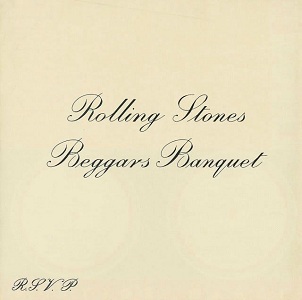
The Rolling Stone’s 1968 album Beggar’s Banquet contains what, I would argue, is the magnum opus of all the Stone’s work. 

A song that has fascinated and horrified critics for decades.

A song that made the Rolling Stones one of the most notorious musical acts of the late 60’s.

The song was only spared further controversy with the release of Street Fighting Man a few months later which further antagonized critics of the Rolling Stones. 

Released in 1968, "Sympathy For the Devil" was listed at #32 in Rolling Stone Magazine’s December 2004 listing of the 500 greatest songs of all time.

Beggars Banquet-1968
Original Cover Art
The lyrics of that song trace brutal historical events beginning with what could very well be today's Gospel. 

"Please allow me to introduce myself
I'm a man of wealth and taste
I've been around for a long, long year
Stole many a man's soul and faith
And I was 'round when Jesus Christ
Had his moment of doubt and pain
Pleased to meet you, I hope you guessed my name." 

Of course, this could also be alluding to the crucifixion but the song unveils an interesting theological perspective in light of today's Gospel. 

The song is a first hand narrative that recounts everything from Christ’s crucifixion, to wars, to assassinations. 

And the only name given for the narrator, at any point, is Lucifer once towards the conclusion of the song. 

and even when that name is given, it is implied as if it stands as just a nickname. 

There are two characters present in Luke’s Gospel for today; the devil and Jesus.

Luke portrays both Jesus and the devil as two distinct characters. 

Jesus has just been baptized in the Jordan with John where he receives a title in Luke chapter 3 when the heaven opens and a voice comes from the heaven announcing, "Jesus is MY Son, THE Son, THE Beloved." 

When we hear of this title being announced we usually consider it to be more of a pat on the back or a term of endearment, but this title announces the ROLE of Jesus in God’s mission. 

Jesus is to serve as the means by which God will be revealed to the entire world. 

And while Jesus is given the task, the method in which that task is to be accomplished has not yet been decided. 

In today's Gospel, though, Jesus will make that decision with the devil’s counsel at hand. 

Spooky, isn’t it?

Make no mistake, there is a great deal at risk in this story. 

God made flesh in the form of Jesus the Christ is fully human and fully divine, not only making the man, Jesus exceptionally special, but making God exceptionally vulnerable. 

If Jesus succumbs to the power of temptation, becoming infected by sin, so too, will God become infected by sin. 

The fate of the entire Gospel and God’s will for the world is to be decided by Jesus, led into the wilderness by the Spirit while being tested by the devil.

It is a pretty big task right out of the starting gate, but we find Jesus wandering off into the desert in complete confidence. 

What may be the most striking feature of this story is that the confidence that Jesus finds is in the very thing that makes him unique from every other human being. 

He is just as susceptible to temptation as any of us, but his unapologetic reliance on the Divine is what sets him apart. 

This isn’t the first appearance of the devil, the serpent, the tempter, the adversary, the Satan. 

There are whole theological and biblical dissertations written on the nature and character of these figures. 

There is even evidence that they may be different characters, but they all play a continuous role in scripture. 

Each is tasked or takes up the task of testing individuals and groups the Adam, Job, David, and Israel to name but a few, all considered to be sons of God in their own right.

And each of the accounts of their testings reveal their failures. 

So what is Jesus but just another son of God to be tested and found wanting?
~

On Thursday we were given a respite from the normal headlines that revolve around terrorism and presidential primary politics. 

It felt incredibly refreshing and the news was fascinating. 

A team of scientists announced that they had recorded and identified the sound of two black holes colliding a billion light-years away. 

This event is the first direct evidence of gravitational waves, which create ripples in the fabric of space and time, confirming Albert Einstein’s theory of relativity from a century ago. 

While confirming Einstein’s theory, it also enriches our perspective on black holes, the bottomless pits of gravitational pull where even light cannot escape. 

Math and science may not be my particular strong suit, but I couldn’t help become a bit obsessed with the topic, reading articles, watching press conferences, and even cartoon crash course physics classes on YouTube. 

Two black holes merging
What most drew my attention was the image of the two black holes, circling one another in a counterclockwise motion, distorting the stars and light around them, like a spoon stirring in a cup of coffee. 

As I watched this image, these two amoeba-like objects merged into one, causing one final ripple of energy. 

Black holes can easily capture not only matter and light but our fascination because of their inescapability. 

Today’s gospel depicts God’s exploration of another kind of black hole. 

The black hole of our brokenness, our temptation. 

A void that no one has yet escaped, and yes, Jesus is born into this brokenness, but this story accounts for his first immersion into it. 

Jesus, THE Son of God, THE Light, intentionally diving into -living into- the black hole we have created, the blackhole of sin and death that we are assured will be converted to a blinding sun because of the RISEN Son. 

But first the light of God, THE Son will enter into the darkness, and the darkness will not overcome it.
~

The devil challenges Jesus with three temptations all centered on Jesus’ new role and title; Son of God. 

He first challenges Jesus with the most basic need, using Jesus’ hunger against him, the question is asked, “If you are a Son of God, just make a stone into bread.”

What is the harm? What is the pitfall of this challenge?

No one will know, he performs miracles to feed whole crowds later on, and if he starves to death at this point then the mission will have failed anyhow!

But if Jesus gives into this temptation, then the God whose purpose is to create, redeem, and sustain all that has been made, will instead have proven to be a God that serves the self. 

He then challenges Jesus a second time, offering Jesus the throne, not a heavenly throne but an earthly throne that will rule over every kingdom of this world. 

But it is the prize, not the price, that is unworthy. 

God doesn’t come to us through Jesus seeking a political rule over the world through the broken systems, kingdoms, and borders that we draw. 

God comes to us through Jesus in order to break those systems, to raise a new kingdom, and erase the borders that we draw. 

Redeeming a fallen world, not taking the dirty old hand-me-down we have destroyed, but lifting up a new reality, choosing to instead transcend the reality we have created, the created order we have distorted. 

And while the prize being offered by the tempter is undesirable, the price tag already belongs to Jesus. 

This word for worship is only found in Luke’s Gospel three times. 

We heard it twice today, and the third time is in the final sentence of Luke’s Gospel when the disciples fall down and worship Jesus, just before his Ascension. 

And the final temptation is the creation of a spectacle that will pull back the curtains before the audience of the world so that all may see God. 

This plan, too, is flawed, because it will prove the existence of the Divine and the Divinity of Jesus, beyond doubt, beyond question, beyond speculation, but also beyond choice, beyond trust, beyond faith. 

Because it will not longer be a matter left up to faith, choice, or trust. 

And love without choice isn’t really love at all. 
~

This is one of my favorite gospel stories, because it is in this story that I find God's choice to suffer with us revealed clearly. 

And if God can resist temptation in a form as weak as my own, then there is hope that I, too, can be led into the wilderness of the world and face my own temptations.  

Evil at its worst is allowing ourselves to be fooled into believing that the devil doesn’t exist. 

Not because the evidence isn’t there but because we don’t have the courage to face who the devil truly is. 

While the narrator’s name remains mostly unsung throughout The Stone’s "Sympathy for the Devil", as the song descends into the Jagger’s signature falsetto at its conclusion, the listener cannot help but feel mocked as we are asked again and again; 
Painted by Rohann Zulienn

"What’s my name?
Can you guess my name?"

But hidden deeply in the midst of the rhythmic samba drums and a blistering guitar riff from Keith Richards, we hear the narrator clearly announce. 

I’ll tell you one time, you’re to blame!

The devil serves a distinct purpose in our understanding of temptation and sin. 

The devil allows us to name our sin and to face that sin. 

We see sin as a faucet but the Gospel doesn’t see sin in that way. 

In the Gospel things occur in realms and kingdoms, and it is God who comes to us through Jesus into this realm of sin.

God, exposed to our sin, our suffering, our anger, our pain, our temptation through Jesus.

And Jesus is the One pulling us out of it, but we must first recognize that we are even in it to begin with, only in that moment will we take that hand that is reaching out to us. 
~

A friend of mine was watching his child die as I was watching my firstborn come into this world. 

We would talk from time to time about matters of faith and doubt back before I started seminary. 

Shortly after my daughter was born, his daughter died. 

A few weeks after the funeral he came to me and asked to see pictures of my daughter. At one point he even came to my house and asked to hold her when she was still an infant. 

While I felt so much guilt, he reassured me that I had no reason to feel guilty. One day he came to me and offered a stern warning, he told me this; "I would trade every last minute of my remaining breath to revisit even the worst day I ever had with my daughter."

I’ve tried to remember that at 3 AM on my knees in bathroom with sick kids, but sometimes I do forget. 

The hope that we find in this message is that God comes to us through the Son, Jesus the Christ, into the sickness of our sin, exposed and vulnerable, loving us, saving us, and wading into our worst days with us, in spite of the devil that stares back at each of us in the mirror daily. 

Amen


He Ain't Heavy - Gilbert Young


Sources

The Rolling Stones. ‘Sympathy for the Devil’. on Beggars Banquet. n.p.: London Records, December 6, 1968.


Overbye, Dennis. ‘Gravitational Waves Detected, Confirming Einstein’s Theory’. Science (The New York Times), February 12, 2016. http://www.nytimes.com/2016/02/12/science/ligo-gravitational-waves-black-holes-einstein.html?_r=0.