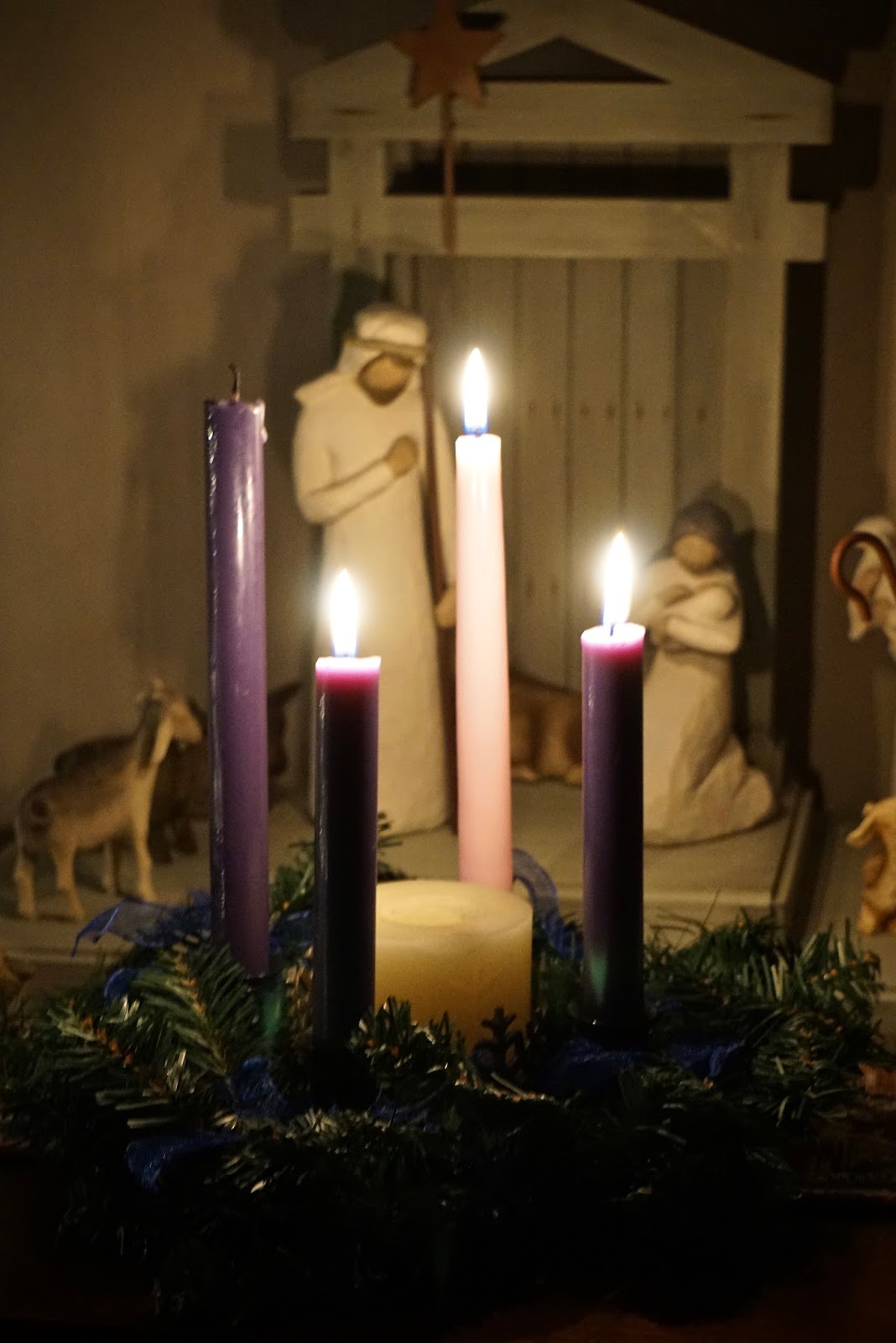
Monday, December 25, 2017

Play It Again, John!

John 1:1-5

Photo by Serge Jouqier on Unsplash

Growing up, I had a compulsive habit of latching on to certain songs and listening to them over and over again. 

I used to utilize a tape deck to record the top hits from the local radio station “B104” and of course from the ever beloved “Casey Kasem’s top 40.”

Once I found a song I liked I would record it, listen to it, rewind it, then listen to it again. 

I would repeat the process until my parents began to lose their sanity and they would forbid me from listening to that particular song in their presence ever again, for all time. 

After considering this illustration for today’s sermon, I contemplated making them a mix CD of all my “best hits” for Christmas, but I know it’d end up in the trash. 

When I saved enough money to buy my first album, things got worse. 

Then when CD’s came out it got even worse for my parents. 

Luckily, by the time digital music came into it’s own, my wife was the only one who would have to be subjected to my temporary obsessions with certain songs and musicians. 

I still have my favorites and I still enjoy discovering the stories behind what inspired those songs, the meaning behind them, and the stories of how they were recorded. 

Pastor Stephen and I have a similar habit in the office, reciting lines from films we both enjoy. 

Cinematic masterpieces like Nacho Libre, Zoolander, and O’ Brother Where art Thou?

This habit not only drives my wife nuts but between Stephen and I, we are now driving Sharon slowly insane in the office with this habit as well. 

But there is just something about a good story that I have always found valuable. 

Songs tell stories, films tell stories, and I love to tell stories of my own but when you find a good one, it never seems to get old -At least to me-

Photo by Picsea on Unsplash

Each of the synoptic gospels start out THEIR story in their own unique way. 

Matthew and Mark both begin by announcing Jesus, using particular titles to justify the relevance of the story they are about to present. 

Matthew announces Jesus as THE Messiah!

The new King of Israel, tracing his lineage back to the Davidic line. 

Mark announces Jesus as THE Christ!

The savior and redeemer of the entire world. 

Matthew and Mark begin both accounts by offering their own defensive justification for the validity of their stories by using those titles

Luke starts out one of the most readable Gospel accounts, in an odd way, 

basically proclaiming that he has a story to tell too and he swears that its just as good as the others you’ve heard!

Defensively justifying the validity of his own story in a pretty awkward way.  

So, all three of the synoptic Gospels could really begin with “I swear, everything I am about to tell you is the truth because of….”

John’s introduction is different though, which may be but one of the many reasons why John is not considered one of the synoptic gospels, or we could say “similar” gospels. 

John decides to go back to a story that is too good not to retell. 

Perhaps because John just wants to retell a good story, or maybe, just maybe, 

God has already retold that story through action and John is just the only one who has recognized it?

“In the beginning when God created the heavens and the earth, the earth was a formless void and darkness covered the face of the deep, while a wind from God swept over the face of the water. Then God said, ‘Let their be light;’ and there was light. And God saw that the light was good.”

It’s the first creation account in Genesis, the very first words of the Bible, the very first story of how God began this relationship, with us, with all living things, the world, and even the universe. 

It’s the story that puts God on full display for what God truly is; an artist, a conductor, an architect, THE Creator. 

Up until John’s account we seem to split up these two stories. 

Still to this day christians murmur discontent over the doom and gloom, the drudgery of the Old Testament. 

We even find ourselves referring to that “Old Testament God” as if there are somehow two different Gods in the Bible. 

What John does, is John takes an old song and he spins his own cover of it. 

Because there is something new to add to this story, not something tacky and out of fashion like a synthesizer, but something hypnotic and promising, that lifts the story to a new level. 

Of course, we all know what it is, right?

It’s Jesus!

Its Christmas Day, you know the answer is gonna be Jesus!

And there it is, John retells the story but this time he declares Jesus as the instrument that makes the sweetest music of all. 

Jesus, the Son, is also the Creator, and as a creator that is always creating, they are also the Holy Spirit, still creating, still making all things new, 

One in three, three in one, distinguishable persons -or in substance- yet indistinguishable in their essence -their nature-

Probably a bit much for Christmas if we go down that rabbit hole, right?

So what should we take away from this theologically rich, over the top, heady introduction from John?

Number one; John doesn’t need to justify the story, because John knows that the story can justify itself, God doesn’t need John’s help in sprucing it up a bit. 

Number two; God as a creator has always been creating, will always be creating, and God creates in the ways that we least expect it, in the places we usually are not looking for God to be at work.

Number three; the light shines in the darkness and the darkness does not overcome the light, but the light also, does not overcome the darkness now does it?

Photo by David Huang on Unsplash

Christmas continues to be an odd time for me. 

Because people approach Christmas in the way I think they should approach Easter. 

You see?

Easter is anxiety, despair and death, wrapped up in the joy of the resurrection. 

We should cherish THAT wrapping paper, we should hold up the box it’s packaged in for the prize that  it truly is!

Because God takes death, boxes it up, seals it in, and ties a bow on it that assures us all of redemption. 

But Easter has become the consolation holiday

Christmas, on the other hand, is the gift of joy, wrapped in despair. 

The story of Christmas is basically that gift under the tree that you know is just a pair of socks or a bad tie, yet, when you open it up, it turns out to be something absolutely amazing!

God comes to the world in darkness, in despair. 

God comes to us like the last gift under the tree we’ve picked to unwrap. 

A peasant child, conceived under questionable circumstances, born to a Palestinian Jewish hillbilly couple, in the worst accommodations possible, while living in a state of oppression under the thumb of a foreign authority that takes every opportunity to prove how worthless you are. 

Like dictating your travel through a mandatory census, then fleeing to Egypt to avoid being slaughtered at the hands of the same earthly authority that told you to go there in the first place.

It isn’t a story wrapped in the niceties, we seem to associate with Christmas. 

Because we unwrap it way too far ahead of time. 

We aren’t fans of the darkness that the light is wrapped in, so we just unwrap it as quickly as we can, and throw away the wrapping paper. 

Photo by Les Anderson on Unsplash

Its Christmas Day and most of the world is acknowledging Christ’s Mass from their homes. 

The majority of folks checked the box last night, so why do you all get the story without the angels, the shepherds, the manger, you know? 

All the good stuff?

Because you showed up, and therefore you get to receive the WHOLE story. 

I would argue that despite all the bells and whistles of Christmas Eve, John’s introduction offers the richest kind of hope that we need today. 

It’s why I short changed the Gospel today, because versus 1-5 can fill you with the kind of hope that God has promised us from the beginning of time when a mere two Hebrew words creates all life, all of nature, the entire universe; 

Yehi or

A better translation is simply “Be light”

Its so simple, far simpler than we can even imagine. 

A mere two words, spoken by the most unimaginable power the world has ever seen!

Perhaps that is why The Word is made incarnate wrapped in so much darkness. 

Because it shows us the true power of the One true God

A God that does not need to abolish the darkness to bring light, 

A God that uses the darkness to offer the contrast we need to recognize the Light. 

So if you take anything away from today, remember this; 

Look for God in the dark places, don’t shy away from the darkness and pretend its not there, because God’s light is the clearest in those places. 

~

One of those songs I’ve often obsessed over has been haunting me all this week as I worked through today’s Gospel. 

My son’s favorite musician, “The Boss” Bruce Springsteen made it the title song for his 11th album in 1995. 

It’s a haunting retelling of another good story, a classic piece of American Literature by John Steinbeck “The Grapes of Wrath”

The story follows Tom Joad, a member of a family that has left their home in desperation, looking for work, trying to just scrape enough together to feed their children. 

And at the end of Steinbeck’s novel, Tom makes the decision to leave his family for their own sake. 

It is the end of the novel but it is also the lowest point in the story. 

Springsteen’s retelling of that final scene as Tom is saying goodbye to his mother, is included in the final stanza of his ballad “The Ghost of Tom Joad”

He sings; 

Now Tom said, 

"Mom, wherever there's a cop beating a guy
Wherever a hungry newborn baby cries
Where there's a fight against the blood and hatred in the air
Look for me, Mom, I'll be there
Wherever somebody's fighting for a place to stand
Or a decent job or a helping hand
Wherever somebody's struggling to be free
Look in their eyes, Ma, and you'll see me”

~

So I leave you on this Christmas morning with the promise, that regardless of what despair and darkness comes our way, 

We are promised, just like in this story, the BEST story, the one that the Boss retold from Steinbeck and Steinbeck retold from John and John retold from Genesis; 

The joy, the hope, the promise, the assurance, that God is still at work can and will always be found, 

Wrapped in some pretty dark packages, but that’s exactly where Christ is needed the most. 

Amen
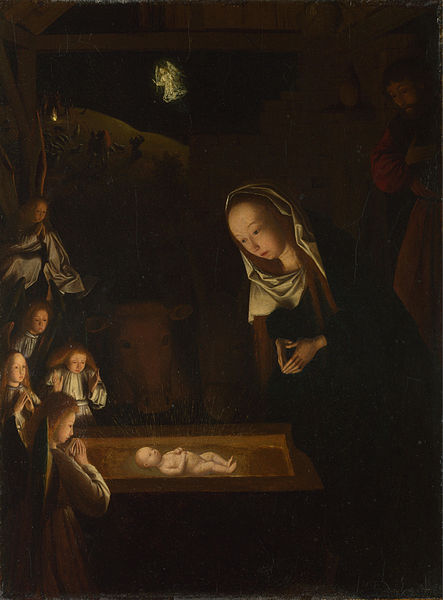
File:Geertgen tot Sint Jans, The Nativity at Night, c 1490.jpg
Geertgen tot Sint Jans, The Nativity at Night 1490 (PD)
Sources

Lenski, R. C. H. Interpretation of St. John’s Gospel. Minneapolis, Minn.: Augsburg Fortress, 2008.

Springsteen, Bruce. The Ghost of Tom Joad. Audio CD. Columbia Records, 1995.

Steinbeck, John. The Grapes of Wrath. Penguin Classics. New York: Penguin Books, 2006.

Sunday, December 17, 2017

Are we there yet?

John 1: 6-8, 19-28

Photo by Nathalia Segato on Unsplash

“Are we there yet?”

It’s like someone dragging their nails across a chalkboard!

Last month, I took our confirmands to Lost and Found. 

And they were great, really! 

They were so amazing. They truly inspired me, not only in my ministry but as a member of this community!

With one exception, it never fails…

“Are we there yet?”

They always wait until you’re about a half hour away from your destination, far enough into your journey that you think you’ve escaped this nagging, annoying, and pointless question. 

After all, it doesn’t matter how far along you are, it isn’t going to change the time it takes to get there!

It’s always followed up -no matter how close you are- by some kind of disgruntled “Ugh!”

And on top of all that, why can't they just read the signs on the road, or better yet,  use the phones in their hands that their eyes have been glued to through the entire trip!

It isn’t just confirmands. My kids do it too, and I am sure there isn’t a parent here that can’t attest to a similar story. 

The “are we there yet?” bug is at its worst exactly three quarters of the way through any trip and it will persist non-stop from that point on. 

It’s like they have some biological internal GPS that gives them a signal at that very moment to begin persistently questioning and groaning in response to the driver’s reply 

until you either arrive, or the driver just gives up all hope, opens the car door, and rolls out onto the interstate to escape. 


Today marks the third Sunday of Advent. 

We are exactly three quarters of the way through our Advent journey. 

What’s more, as Pastor Stephen has said several times,

This is the SHORTEST Advent we can possibly have!

But the “are we there yet?” bug usually starts on Thanksgiving Day. 

It begins before we even get our luggage packed, pile into the car, and pull out of the driveway!

It does get worse three quarters of the way through our journey though. 

For me, the battle cry to defend the phrase “Merry Christmas” or “Put the Christ back in Christmas!” is exactly the same thing as “Are we there yet?”

Because no one is interested in defending the sanctity of Advent and everywhere I look from November on, I see Christmas. 

Yet, people can’t take down their Christmas decorations fast enough after that ONE single day!

They end up skipping eleven of the twelve days of Christmas!

Now, THAT is an assault on Christmas if I ever saw one. 

An assault on a Christmas that is not a day, but a season that lasts all the way to Epiphany!

What I see is a “Christmas” in the only form we seem to recognize it anymore.

A Christmas that is dictated to us all, by a Secular American Christian interpretation. 

Oftentimes pushed by a secular American Christianity that dictates to the rest of us what exactly is Christian and what is not. 

Those who are most often crying the loudest that we defend Christmas with their prescribed acceptable greeting; “Merry Christmas!” 

have oftentimes been the very people that respond to us as if we’re from a foreign land or inform us that we aren’t REALLY Christian when we respond to their greeting with “Happy Advent”.

A little over a year ago, I recall going to a restaurant with Pastor Stephen. 

While we were walking in, someone passed us and proclaimed “Merry Christmas!” to which he replied,

“Happy Advent!”

Obviously irritated with his foreign ways, they replied confrontationally “Merry Christmas!”

To which Stephen explained, “How can you wish a Merry Christmas when we’ve just started Advent? You’re skipping the most important way we prepare for Jesus?”

Confused, they replied, “Well, Christmas is coming so Merry Christmas!”

I was thrilled to know we would be sharing in ministry together when he exclaimed, 

“Oh. Well, in that case; Happy Easter!” as we went ahead and entered into the restaurant. 


Photo by Aaron Burden on Unsplash

This is all deeply relevant to both the season we are in and the Gospel reading for today. 

John’s Gospel is an attempt to bridge a divide between two different communities. 

The Greek community and the Jewish community. 

Jewish thought was considered by the Greeks to be a simpleminded and crude view of the world.

John’s Gospel attempts to bridge that divide by finding something that both cultures hold in common. 

What John reaches for are two terms: Logos and Dabar. 

Dabar is the Hebrew term for word. 

In Jewish thought, a single word from a person is like a bullet. 

Once fired, it can never be placed back into the chamber. 

And if not fired carefully, with a specific and thoughtful purpose, it can do irreconcilable harm. 

God’s Word for the Jewish people, on the other hand, is different. 

God’s Word represents something that is fired true and carefully every single time, with a specific purpose. 

A Word we can only aspire to follow and emulate, but a Word we always fall short of. 

Now, Logos, is the Greek term for word. 

The Greeks perceived everything in the world as if it was in a constant state of flux. 

They compared the world and life to a river. Everything was always changing. 

And that is a good analogy because you can never step into the same river twice, the water is always flowing and therefore it is ALWAYS changing. 

Therefore, life and the world had a real potential for chaos for the Greeks. 

What brought order to it all, was Logos, the Word, 

which represented reason, logic, truth, sound judgement, and ORDER to the chaos of the world and life. 

For the Greeks, the word is what called people to thoughtful reflection and debate. 

So, in the verses leading up to our Gospel for today, John uses these two views of these different terms to illustrate just what Jesus represents.

Jesus is THE Word.

A Word above all other words. 

For the author of John, THE Word is simply God’s mind which has now become incarnate, made flesh in this person, Jesus the Christ. 

But the Word is so much more for John, it is The Light. 

The Word for the author of John is a Word above all other words, it is a Light above all other lights. 

But even in the early Christian church, John the Baptizer was a confusing character. 

He had many followers, usually drawing larger crowds and gaining more disciples than Jesus. 

So, the author of John attempts to clarify the role and purpose of John the Baptist as clearly as possible following John’s opening. 

The authority who has given John his role is specified in the Gospel today - God. 

His role or title is also specified in the Gospel for today -  witness.

John’s special abilities are outlined in the Gospel for today as well - NOTHING, zero, zilch. 

In fact, John’s gifts and appearance based on most descriptions is relatively lowly, even crude, but it is the office given to him by God that is to be so respected.

He is a witness to THE Word, THE Light. 

And that may seem relatively unimpressive until we find ourselves in a place devoid of all light. 

Because when we are in the darkest places, it’s odd how much you can crave light. 

Photo by Jeremy Bishop on Unsplash
I used to go spelunking or caving on a regular basis in a place called Bowden Cave. 

Friends and I would wade through underwater pools, crawl through narrow spaces, and rappel down underground cliffs. 

I got the jitters a few times when I was in a particularly tight space or when I got a little bit turned around. 

I had always read carefully about the precautions that should be taken to ensure the safety of you and your group, but we probably weren’t always as careful as we should have been. 

I did feel uneasy about how much light I carried with me though, and no matter how many batteries or spare lights I carried, I never felt like it was enough. 

Sometimes when we explored the deepest rooms of Bowden’s depths, we would turn off our lights just to take in the darkness. 

It was so dark beneath the surface of the earth, that the darkness felt almost like a weight on your eyes and even your body. 

All your other senses were amplified to such an extent, it was easy to see how one could be drawn towards sounds of water, rocks, or bats if you ran out of light. 

We had all heard horror stories of people being drawn deeper and deeper into the cave when they ran out of light. 

Drawn toward any sound or even an intuition, in the hope that there was light just around the bend, but finding none. 

It is hard to explain, but that kind of darkness always terrified me. 

Not because of the darkness, but because of the hopelessness one would feel in such a desperate situation. 

Photo by Aziz Acharki on Unsplash

John’s situation is a difficult one. 

Because many have been drawn to John and his ministry, craving something that will provide order in the midst of chaos,

stability in the midst of uncertainty, 

purpose in the midst of meaninglessness, 

reason in the midst of ignorance, 

Light in the midst of darkness. 

What they are seeking is THE Word.

And both the author of John and John the Baptist know that John’s task is to assure all people that such a Light, such a Word is on its way. 

But when we are sitting alone in the darkness we can be drawn to all kinds of things, mistaking them for light and only finding ourselves being drawn deeper into darkness. 

John knows he is not the light and in our Gospel reading take note that he is not called to SHOW anyone this Light. 

John is called to testify to the validity of this Word as the authoritative Word, the very mind of God in the flesh. 

He is only called to testify to them, so that they may believe through him, NOT SEE through him!

He isn’t called to SHOW them the Light, he is called to be the means by which they will believe in that light, 

patiently waiting in the darkness rather than being drawn deeper and deeper away from the light. 

And John is a man of God, given a task by God but he knows that if he is mistaken for the Light, he will draw the world away from the Hope that he is announcing. 

Sisters and brothers, Christmas is fun. 

Believe it or not, I really and truly do love this time of year. 

But if all the trees and wreaths and stockings and mistletoe and carols and large, bearded, diabetic men in red suits don’t help us follow our call to point toward the true Light and Word of God, 

If impatiently pushing people into a “Merry Christmas” doesn’t draw them into the true Hope we are patiently awaiting at Advent. 

Then maybe this journey needs to take longer?

Maybe we need to stop asking if we are there yet and just enjoy the journey?

Because maybe we just aren’t ready yet?

But that’s okay, we still have a little bit to go. 

Maybe we can share the map with the rest of the world, inviting them to join us for the last leg of this ride. 

Amen

Photo by Julentto Photography on Unsplash

Sources

Barclay, William. 2001. The Gospel of John: The New Daily Study Bible. Revised, Updated edition. Louisville, KY: Westminster John Knox Press.


Sunday, December 3, 2017

Things Change.

Isaiah 1-12
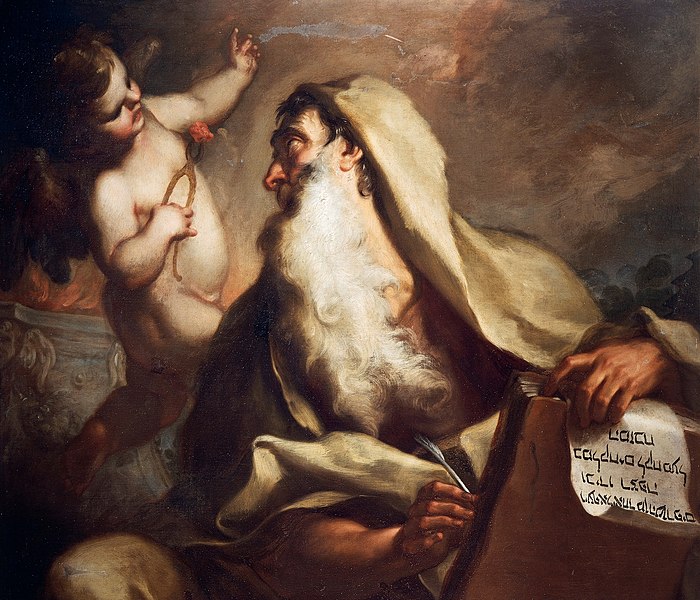
File:Antonio Balestra - Prophet Isaiah.jpg
Antonio Balestra, Prophet Isaiah 18th Century (PD)
Sitting in my first systematic theology class one afternoon, my professor posed a remarkably simple question to my classmates and me. 

Does God suffer?

Throughout seminary, there are a number of questions that can divide a classroom, but rarely do you find a question free of devil’s advocates and soapbox know-it-alls. 

That is the beauty of this question.

It starts so innocently. 

Does God suffer?

Of course, nine times out of ten you will find the same answer agreed upon. 

Yes, God does most certainly suffer!

It is apparent in the stories of the Bible, especially in the Christian narrative in which God suffers and dies on the cross as Jesus Christ. 

But this question is the little thread that unravels the whole theological Christmas sweater as we move into Advent. 

Because the term to suffer by its very definition implicitly means TO CHANGE. 

And at first glimpse, this isn’t such a bad thing until we consider what other problems this causes. 

Because a God that suffers and changes, means that God may not necessarily be immutable, consistent, reliable, dependable, and worst of all; 

God could very well be… unpredictable. 

That is a God who exists beyond our need for safety and for control. 

Putting it all in God’s hands is no longer an option, because we would have to redefine what it means to “trust” in a God that may be just as unpredictable as a human being. 

It usually takes less than 120 seconds to throw a seminary classroom into complete disarray after tossing that theological molotov cocktail in the middle of a conversation. 

I enjoyed the experience so much that I threw my own crisis of faith hand grenade when I transferred to another seminary to complete my Lutheran requirements. 


I couldn’t resist throwing out the same question one day in another classroom setting. It was just as exciting the second time as it was the first, because in that setting I found my peers to be far more emotional, and far less thoughtful about the question. 

Rather than approaching the issue as a challenging theological question, it was seen as an offensive challenge to classmates personal views of God. 

The best thing about this question in a setting like this is that the person who ends up setting off that little landmine usually goes unnoticed by the end of the conversation. 

This is the same exact question that has erupted in the midst of the eloquent poem that was read from Isaiah in our first lesson today. 

The Jewish people have just returned from exile, and there are many questions being asked about what had transpired over the course of those roughly 50 years. 

The invasions of Israel had shaken the confidence of God’s people. 

It had shaken their confidence in God, yes, but it had shaken their confidence in the very nature of the world, the very nature of human beings. 

They had experienced pure brutality at the hands of the Assyrians and the Babylonians. 

Image result for Babylonian exile
Gebhard Fugel, On the Waters of Babylon circa 1920 (PD)
Armies that had far surpassed anything beyond anyone’s wildest imagination, in size, tactics, and resources. 

Committing atrocities, far beyond what even the most twisted mind ever thought imaginable. 

The Assyrians and Babylonians had learned the power of fear, and they used it. 

Isaiah’s poem is beautiful, though. 

Beautiful because of the raw emotion of the poem, but partly because it bears witness to the post traumatic stress of what the people are seeing as they return to their homeland. 

Returning to the ash of their homes and fields. 

The ash of their nation’s seat of power.

The ash and ruin of the most sacred holy place imaginable, the temple, God’s home. 

It rekindles their memories of the battles they’ve experienced. 

The sight of these ruins brings back the pain and horror of what they have lost, not only the loss of places and people, but a complete loss of innocence. 

Having intimately studied post traumatic stress on many levels, I am always deeply moved by Isaiah, especially the third and final portion of Isaiah. 

Anyone who has ever found themselves wrestling with trauma and pain can relate to Isaiah in the most personal way. 

It is especially so in this poem, which asks where God has gone and why God has changed. 

A God who has begged and pleaded for the people to turn back, not in perfection but in relationship, responding to the love of God with love FOR God. 

But like most relationships, people do not fully appreciate what they have until it is gone. 

And so Isaiah calls out for God’s return. 

Isaiah calls out to God to return in the same way God always did before in mighty acts and awesome deeds. 

Isaiah asks God to again be on full display, undeniably so, in a way that no one can ignore. 

Sound familiar?

It's nothing to be ashamed of, we all do it. 

I did it a few times sitting outside of an operating room waiting for the doctor to invite me in as my children were born. 

I’ve done it at the bedside of those suffering and dying, in cemeteries, funeral homes, and hospitals. 

I’ve done it on the ash of a battlefield and as I waved at a big yellow school bus on the first day of school. 

These are the times we look to God, these are the times we call upon God’s mighty acts and when those cries for God go unanswered, our own relationship with God can become conditional. 

Photo by Feliphe Schiarolli on Unsplash

Last week, I did something I hadn’t done in a long time. 

I went to see a movie. 

Regardless of what the critics had said, I love comic books and I couldn’t resist the urge to go see Justice League. 

The opening sequence is a home movie of a little boy interviewing Superman, asking him about the big S on his chest. 

Asking Superman if it is really a symbol for hope, which Superman confirms it to be. 

The home movie then fizzles out and we are returned to the scene of a world without Superman. 

A Metropolis in shambles where Lois Lane kneels before a shattered statue of Superman. 

A Gotham city plagued by crime and preyed upon by new villains.

A Batman regretting the part he played in Superman’s defeat and death, knowing that he now must defend the world without Superman’s strength but more importantly without Superman’s character. 

It wasn’t the most well written script, but it did a good job of portraying a world quite similar to the world Isaiah is gazing upon in our reading today. 

A world that has changed, a world either without the hope it has relied on or perhaps unable to recognize that hope it had relied upon.

A world that has suffered so much that it is unrecognizable to the hero’s who defend it. 

At one point Alfred, Bruce Wayne’s butler exclaims, “This is a world I do not even recognize anymore.”

To which Bruce replies, “I don’t have to understand this world, I just need to help to save it.”

Later in the film, Batman, the Flash, Aquaman, Cyborg, and Wonder Woman decide they need to resurrect Superman. 

But there is opposition among the heroes towards this plan because they realize that death and yes, suffering, changes us all, even a superhero, even God. 

And so, they resurrect Superman in fear that he may not only turn away from them but perhaps even turn against them. 
~

We are always looking for God to enter into the world in big ways, but it is the little ways that God enters into the world that seems to have the greatest impact. 

But this makes no difference to us, especially in times of want, need, and tragedy. 

And if God gives the slightest hint that God is present with us, we only want more and more evidence of that presence. 

We ask God to jump through our hoops, to come to us in the way that we want, the ways that we think we need. 

The same is true in Isaiah’s poem. 

Verses three through nine are a confession of sin, a lament, and a plea to rekindle the estranged relationship with God and God’s people. 

But this poem is paralleled by two other pleas. 

Verses one and two proclaim that God should once again stand before all other nations like a secret weapon that will lift up Israel as a military might. 

For the nationalists of Isaiah’s day, this is the conditional action that will prove God has once again returned. 

The portion of the poem that was left out of our reading for today, the portion that closes the poem, comes from the high priests who have an agenda of their own. 

First they look out upon the desolation of what they see in verses 10 and 11

Your holy cities have become a wilderness, Zion has become a wilderness,
Jerusalem a desolation. Our holy and beautiful house where our ancestors praised you,
has been burned by fire, and all our pleasant places have become ruins. 

Photo by Jordy Meow on Unsplash

Then, in verse 12, they lay out the condition God must fulfill in order for them to recognize and declare to the people that the Lord has truly returned to them;

After all this, will you restrain yourself, O Lord? Will you keep silent, and punish us so severely?

It is a radical change in tone from Isaiah’s confession and plea, but not such a radical change in tone from our own today. 

Isaiah’s returning community believes that if they can restore their national identity on the throne or their religious identity in the temple, God will return. 

So, they pour all they have into the temple after Rome finally subjects Israel to occupation once and for all. 

Riches, labor, resources, and time, while the world rises up around them ignoring them as they obsess over this building. 

It’s a truly ironic response given that so many of the prophets declare that God’s presence will depart from the temple and dwell WITH the people from now on. 

It is a call for they themselves to be the place where God dwells and to look to the lowly places where God will dwell. 

It is a call to stop figuring out new ways to “DO church” and embrace the ways we are called to “BE church.”

It is a call to stop reliving the church we grew up with and pick up the pieces of the church before us. 

Sometimes, pieces that are unfamiliar, sometimes pieces that we aren’t quite comfortable with. 

Shattered pieces of our own temples. 

Broken pieces of what we knew and loved. 

But when we take those broken pieces and we accept them for what they are, we can make new things from them. 

~

Ethiopian Mosaic at the Basilica of the Annunciation in Nazareth
Years ago, during my pilgrimage  to Israel and Palestine, I had the chance to visit what may potentially have been Mary’s home in Nazareth. 


Outside the church that has been built around the site, nations were invited to provide art depicting Mary, the Mother of our Lord. 


Interestingly, as you look at each piece of art, every nation seemed to try and outdo one another. 


The most wealthy nations seemed to have made the most gaudy and grandiose depictions. 


Because they seemed to have latched on to this same notion that bigger is always better. 


But among these depictions of Mary, it was the simple mosaic provided by Ethiopia that was the most striking. 


A collection of mosaic tiles, gathered together to make the image of a simple and beautiful, young woman holding a young boy in her lap. 


The amount of money spent on this art must have paled in comparison to all the others, but its simplistic beauty reminded me that God takes the broken pieces of the church, the world, and our lives and collects them together to make something new. 

So as we go into Advent, while we are busy building things that are grand and magnificent, like a temple, remember to keep your eyes open for those times, places, and people where God may prefer to dwell.

Places like the filth and squalor of a stable. 

Amen

Sources

Snyder, Zack. Justice League. Action, Adventure, Fantasy, 11/17/2017. Warner Bros. Burbank, California

Watts, John D. W. 1987. Word Biblical Commentary Vol. 25, Isaiah 34-66 (watts), 420pp. Waco, Tex: W Pub Group.